8 Tips to Write Effective ChatGPT Prompts

TL;DR
Prompts are the instructions you hand ChatGPT, and the quality of what comes back tracks directly with how clear you are. This guide walks through practical tips for marketers: spin up personas to test campaigns and audiences, keep instructions clear, specific and concise so the model nails your intent, and feed it concrete examples or scenarios for context. The throughline is simple. Prompting is iterative, so keep refining until the output lands.
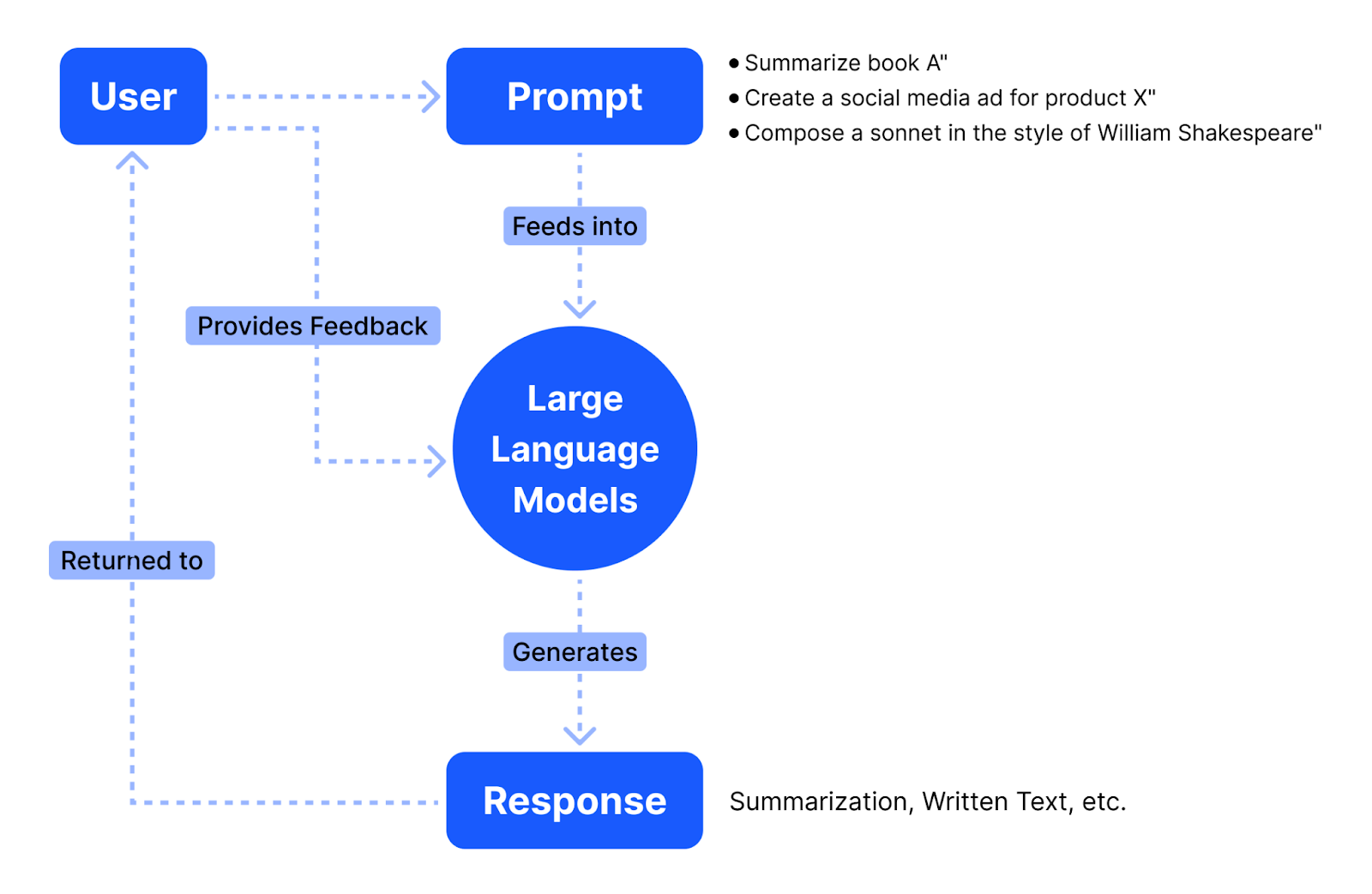
Prompts are the instructions or commands that you provide to AI tools like ChatGPT or Bard. They act as a trigger and a guide for the language model to generate relevant and coherent responses.
When working with language models, the quality of the output depends on how clear the prompt provided is.
Why is prompting needed?
For the language model to respond or to seamlessly perform a new task, it needs to be provided with a clear, specific prompt. The prompts provide the necessary information and background for the model to generate the desired response, ensuring that the conversation doesn’t run in circles and saving precious instructional time.
Also, prompting is a continuous process of learning. You might not get correct answers at the first go and would have to keep fine-tuning your queries until you receive the desired response.
Especially if you don’t want the same answers as the millions of people trying their hand at generative AI.
Things to consider while creating effective ChatGPT prompts
Writing effective prompts is a must-have skill for a marketer in this AI age. We have curated a list of 8 tips that can help you with crafting them effectively.
- Create personas and test your campaigns LLMs are trained on billions of parameters and they are still improving. You can prompt ChatGPT to mimic a personality, hypothetical or otherwise. You could also do this for famous people from the past or present. This can be an interesting exercise for content marketers who need different personas for their marketing campaigns or experiment with different target audiences and points of view.
- Be clear, specific and concise Long and convoluted instructions can be confusing to AI and it can respond with irrelevant information. You should be as specific as possible while requesting a concise summary, writing a creative story, or providing a factual explanation. The more specific you are in the instructions, the easier it is for the AI system to understand your intent and deliver accordingly.
- Use concrete examples and scenarios Examples and precise scenarios provide AI with a contextual understanding of the requirement, enabling it to generate more relevant responses. You can further offer a clear framework for the AI by incorporating real-life examples or hypothetical situations to illustrate your expectations.
Frequently Asked Questions
What is a ChatGPT prompt and why does it matter?
A prompt is the instruction or command you give an AI tool like ChatGPT, acting as both a trigger and a guide for the model to generate a relevant response. It matters because output quality tracks directly with prompt quality. A clear, specific prompt gives the model the background it needs and keeps the conversation from running in circles.
How do I write a clear and specific ChatGPT prompt?
Skip the long, convoluted instructions, since they confuse the model and invite irrelevant answers. State exactly what you want, whether that is a concise summary, a creative story, or a factual explanation. The more specific you are about your intent, the easier it is for the AI to understand and deliver what you actually asked for.
Can ChatGPT pretend to be a persona or a specific person?
Yes. Because large language models are trained on billions of parameters, you can prompt ChatGPT to mimic a personality, real or hypothetical, including famous figures from the past or present. For content marketers this is a handy way to test campaigns against different target audiences and points of view.
Do examples actually make ChatGPT responses better?
They do. Examples and precise scenarios give the model contextual understanding of what you need, which leads to more relevant output. This lines up with OpenAI's own research on 'few-shot' learning, where showing the model a handful of examples inside the prompt measurably improves how well it performs a task.
Why do I have to keep refining my ChatGPT prompts?
Prompting is a continuous learning loop, not a one-shot deal. You will not always get the right answer on the first try, so you fine-tune the query until the output matches what you wanted. Iterating also helps you avoid the generic responses that the millions of other people typing the same lazy prompts are getting.
Sources
Keep reading
The archive →Chatbot Case Study: Purchasing a Chevrolet Tahoe for $1
Learn about prompt injection attacks and essential security measures for deploying AI chatbots, illustrated by the now-infamous $1 Chevrolet Tahoe incident.
AI PROMPTSStrategies for AI Success: Master the Art of AI Prompting in 2024
Become an AI prompting master: tailor persona, clarify tasks, formats, context, examples and sources. Enhance with simplicity, saving successful prompts and staying updated.
AI PROMPTS4 Ways Learning AI Prompting Helps to Improve Personal Productivity
Think AI is just for work? Think again. AI tools can become your secret weapon for a more productive and fulfilling personal life, once you learn to prompt them correctly.
From The Cut
All takes →- Cursor vs GitHub Copilot in 2026: Which One Earns the Seat?
- Cursor vs Windsurf in 2026: Which AI Editor Earns the Seat?
- Form Builders With a Built-In Database: The Form Should Be the Database
- Gemini API Pricing in 2026: The Operator Breakdown
- OpenAI vs Anthropic in 2026: Which Company Should You Build On?
- Perplexity vs ChatGPT in 2026: Which Wins for Real Research?