Can AI-Powered Image Generators Unlock Your Brand's Creative Potential?
TL;DR
AI image generators can speed up brand creative work, from product shots to ad concepts, and brands like Nutella, Heinz, and Cosmopolitan have already proven it at scale. But this article is honest about the catch: copyright is unsettled, stock sites like Getty ban AI uploads, and the US Copyright Office has denied protection to AI-made images. Treat these tools as a fast first draft, not the finished piece.
51% of published content was visual in 2021. Given the fact that human brains processes images 60,000 times faster than text, and 90% of the information transmitted is visual, it’s no wonder that visual content is a priority for content marketers. Instead, the burning question for marketers today is how to best leverage AI image-generation tools for more content.
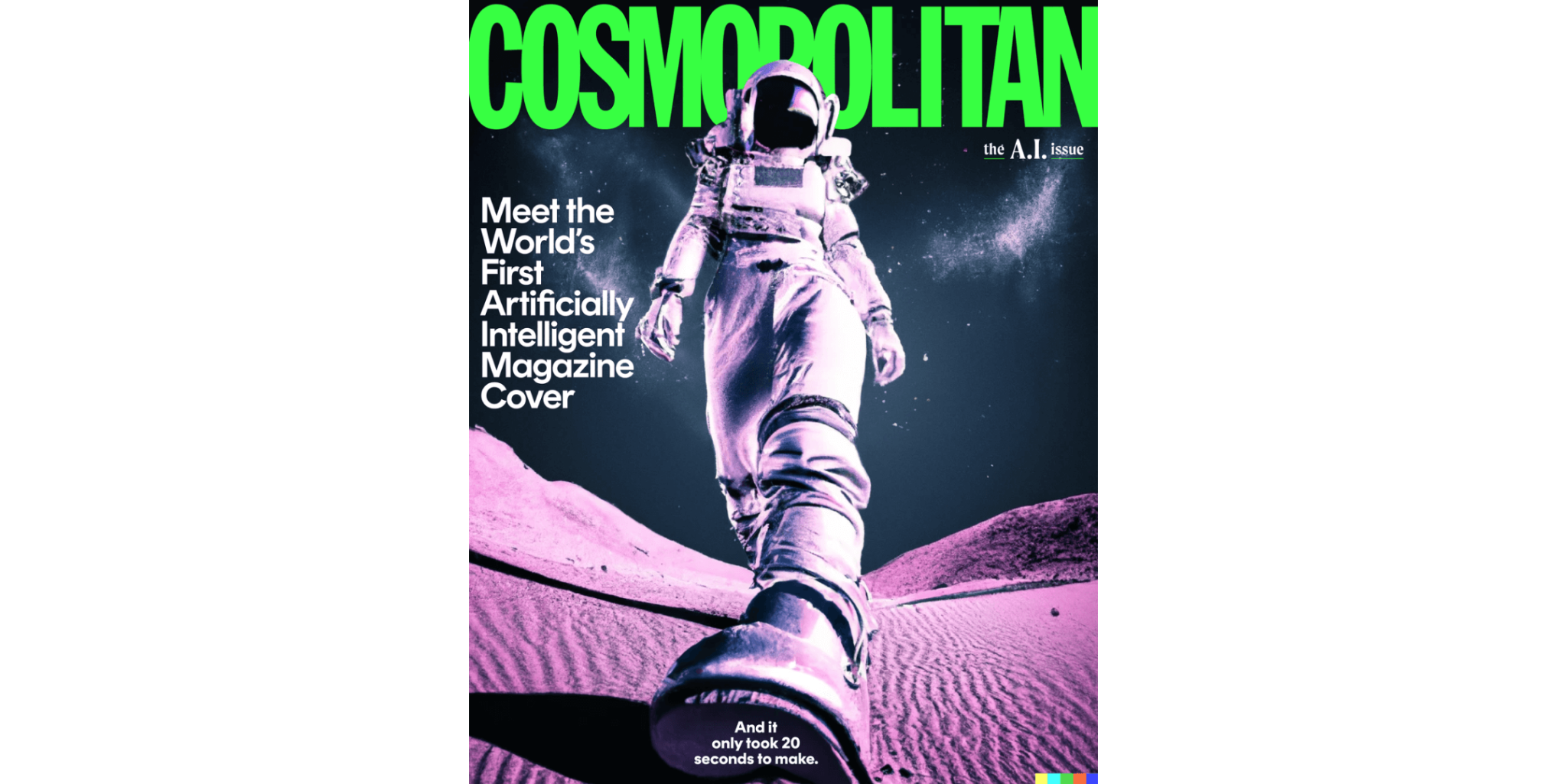
In 2017, Nutella sold 7 million jars in a month by using an AI algorithm to create unique product packaging. Fast forward a few years and Cosmopolitan has become the world's first to publish a magazine cover designed by an AI art generator for their AI Issue.
It took 20 seconds to create the magazine cover.
Where does AI-generated art fit in today’s crowded digital landscape?
AI image-generation tools are finding a place in marketing, as seen in the following industries:
- Fashion Industry - Personalization is an important factor in driving performance, especially in the fashion industry which caters to the consumer's individual tastes. A business can potentially generate 40% more revenue with the right implementation of personalization, leading to better customer outcomes. Through AI image generators, you can create hyper-realistic clothing models that are specific to consumer needs. These models come in every body type, age, size, and skin tone, and could increase your brand reach.
- E-commerce - A study for online shopping reported that 75% of consumers relied on product photography to make their purchases. If you provide the right datasets to your AI tools, they can generate product prototype images that resonate with your buyer. You can also generate multiple images to test market response, something which would have incurred higher costs in the past.
How and why should you use AI-generated art tools in the digital age?
Case in point - Kris Ruby, from Ruby Media Group, has been using both text and image generation tools for her clients. However, she specifies that AI’s contribution is about 10% and the rest is her. Here are a few ways in which AI art generators can be utilized by visual content creators:
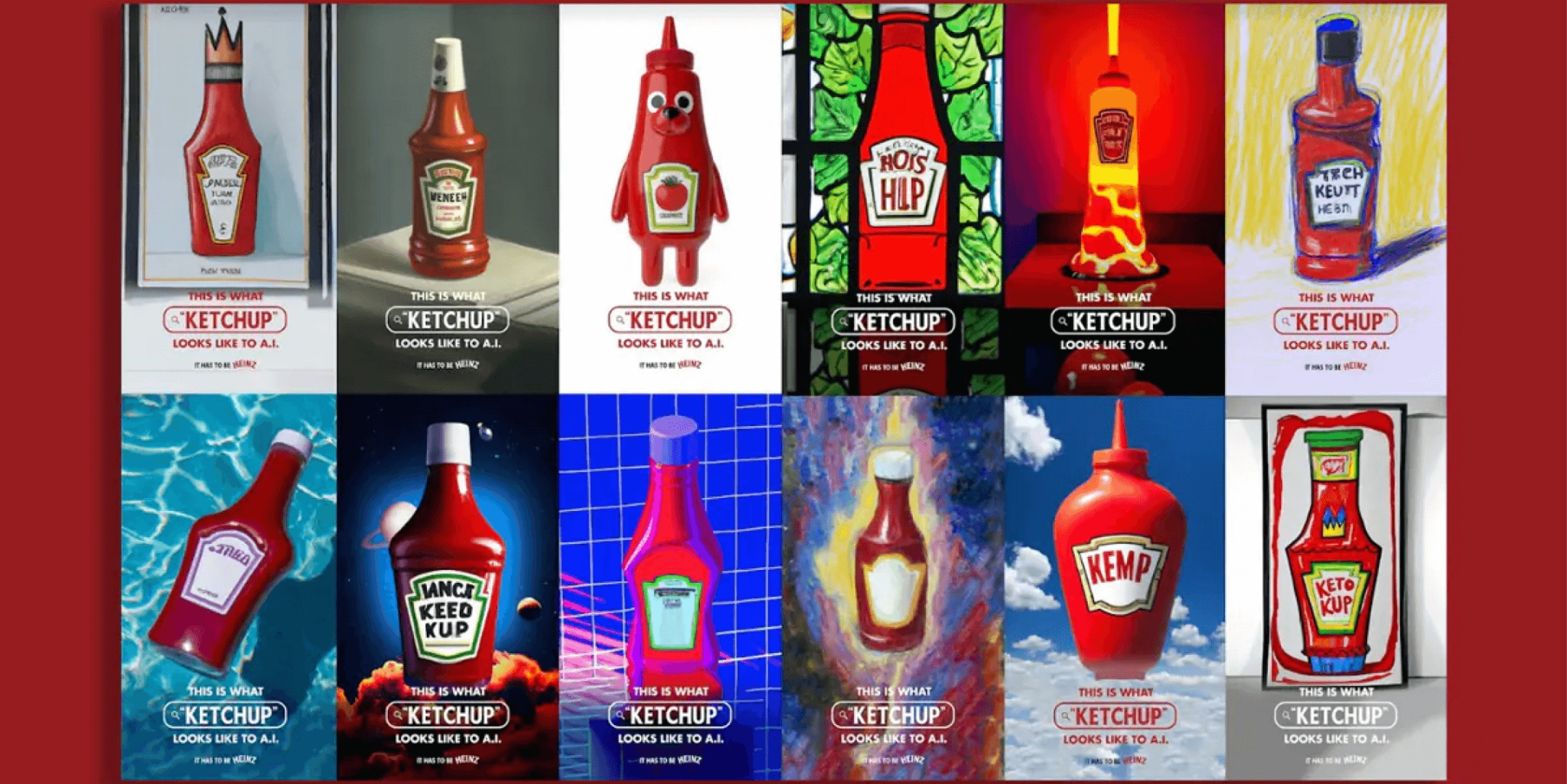
- Understand consumer behavior - Content marketing revolves around nurturing consumers and providing the right information. Since AI can help analyze volumes of data in seconds and chart behavioral patterns, it can provide insights into consumer behavior that are a goldmine for visual content creators and content marketers. You can also utilize it for A/B testing with different campaign ideas. Heinz had a similar experience when they tapped into DALL-E 2, a popular AI art generator, to create an ad campaign that shows what ketchup looks like to AI.
- Create an exceptional user experience - AI image generators use the right mix of art, science, engineering, and design to produce an output - something visual content creators can take inspiration from to create their final product. DressX is using AI image generators to optimize their digital fashion solutions and carve a niche in automated fashion design, by making their design process sustainable as well as more customer-centric.
- Advertising solutions and services - Advancements in technology have led to a new offering in the form of AI-as-a-Service. A global advertising platform and solution provider, MGID, expanded its existing intelligent solution offerings by developing and integrating generative AI. This helps them expand their service horizon, tap into uncharted markets, and power the next stage of optimized ad campaigns.
- Reduce iterations in image creation process - A study showed that 52% of marketing teams revise their assets 3-5 times before finalizing, while 20% of teams reported 5-10 revisions. AI art generators can possibly reduce the number of iterations, thereby becoming the perfect assistant for your designer.
- Customize AI art generators with your brand voice - There are AI platforms that can be trained with an organization’s unique tone and voice. Using visual inputs and past creative assets, AI can create multiple iterations of the next stage in your brand journey. This can help create consistency in your product offerings and acts as a testing mechanism as well.
AI can provide you with great insights that may be useful in the initial stages of ideation and drafting. Always look at it as the starting step and not the final one.
Independent Artists
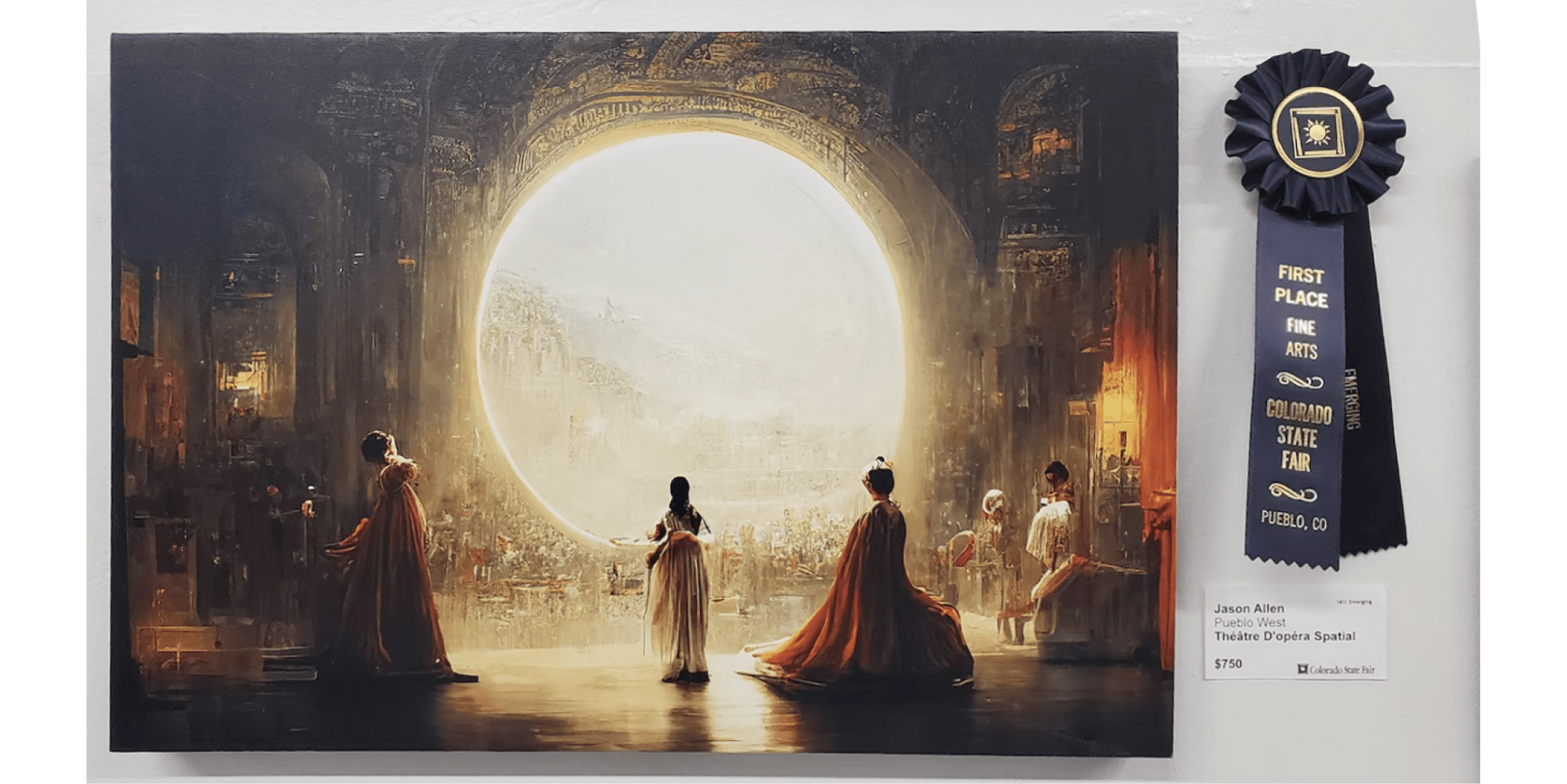
An interesting case is that of the artist Jason Allen, who won first place in Colorado State Fair’s fine arts competition within the “digitally manipulated photography” category. For creating his piece - Théâtre D’opéra Spatial - he took help from Midjourney.
He repeatedly tried out different prompts by adding words like “opulent” and “lavish” to fine-tune its tone and feel. The final outcome was completed on Adobe Photoshop before printing it on the canvas. The question here is one of copyright. Jason Allen has 900 versions that were edited in Photoshop.
Risks involved in using AI image generation tools
While AI-generated images are making headlines on the internet, it is still a relatively new technology that has some problems.
- Image copyright: AI is uncharted territory for copyright and the ethical usage of these images. It can infringe upon the rights of artists whose original work was used to train AI tools, by sourcing images from the web without any consent. A particular class action lawsuit that is gaining interest is of the artist trio that sued AI image generators.
- Usage of AI images for monetization: Stock photo sites like Getty Images are banning the upload of AI-generated images to protect their customers. Getty’s CEO, Craig Peters says, “There’s a lot of questions out there right now, about who owns the copyright to that material, about the rights that were leveraged to create that material, and we don’t want to put our customers into that legal risk area... There have been assertions that copyright is owned by x, y, z, by certain platforms, but I don’t think those questions have been answered.”
- US copyright test for new technology: In another case, AI-generated images for a graphic novel were involved in a copyright battle and lost the right to claim original work. In a letter by the Copyright Office, they concluded that the author could claim copyright for the text and the concept, but not for the images generated by AI.
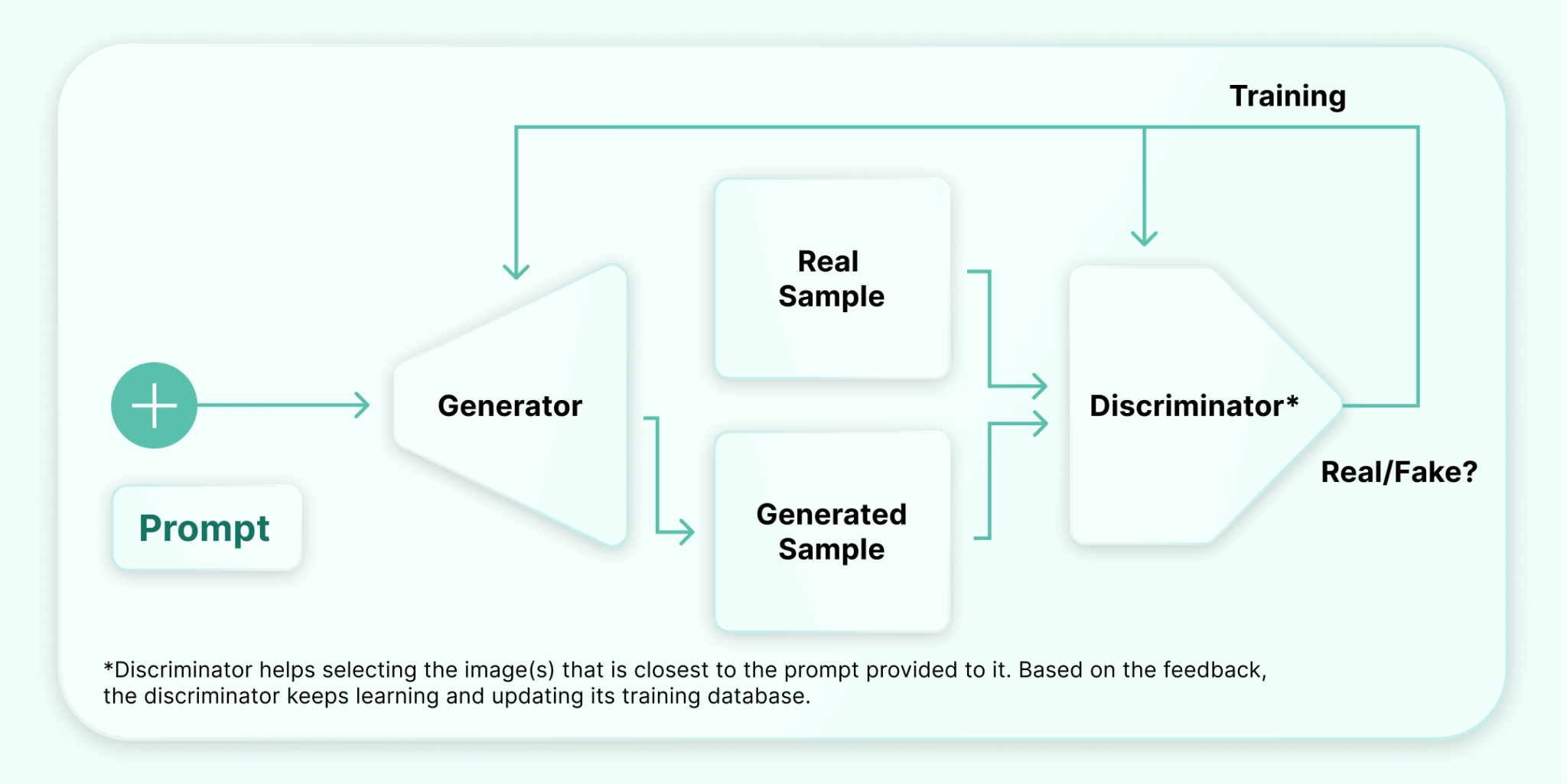
Checking for AI
Spawning.ai is trying to address the copyright issue with their "Have I Been Trained?" tool allowing users to check their 5.8 billion image database. With this tool, you can determine if your art or likeness was used in their AI training datasets. Similarly, V7 Labs developed and released a Chrome extension that could detect AI-generated images. In a video shared on Loom, one of the founders of V7, Alberto Rizzoli, demonstrated the product and claimed an accuracy of 99.28%. All in all, despite their limitations and challenges, AI art generators have a strong future. They can lower the entry barrier for people who don’t come from artistic backgrounds, providing ideas and variations from existing datasets. Combining this in a collaborative effort with professional designers can help create a truly unique marketing experience that leverages technology and art. Try, see, and let us know what your experience has been by writing to us.
Frequently Asked Questions
Can I copyright images I create with an AI generator?
In the US, probably not for the AI-generated parts. The Copyright Office denied protection for the AI graphic novel images and later ruled Jason Allen's Midjourney piece ineligible, while still allowing copyright on the text and concept a human authored. You can own the words and the idea, but the machine-made visual itself sits in murky legal territory.
Which brands have actually used AI image generators successfully?
Nutella ran its Nutella Unica campaign in 2017 where an algorithm designed 7 million unique jar labels that sold out in Italy in a month. Heinz fed prompts into DALL-E 2 for its 'A.I. Ketchup' campaign, and Cosmopolitan published the first AI-generated magazine cover using DALL-E 2 in 2022. These are proof the tools can carry real campaigns, not just experiments.
Why won't stock photo sites accept AI-generated images?
Getty Images banned the upload and sale of AI-generated content in 2022 over copyright and legal-risk concerns. CEO Craig Peters flagged unanswered questions about who owns the output and what rights were used to train the models, and said Getty did not want to expose customers to that legal risk. Until courts settle it, expect stock platforms to stay cautious.
How can I tell if my own artwork was used to train an AI model?
Spawning.ai built a free tool called 'Have I Been Trained?' that lets you search the LAION-5B dataset, a library of roughly 5.85 billion images used to train models like Stable Diffusion. You upload an image or search by text to see if your work or likeness appears in the training data. It is one of the few practical ways for artists to check exposure.
Should AI image tools replace my designers?
No, and the article is blunt about it. PR pro Kris Ruby says AI contributes about 10 percent of her client work and she does the rest, and the piece frames AI as the starting step for ideation, never the final output. The strongest results come from pairing AI's speed and variations with a professional designer's judgment.
Sources
- Dezeen - Algorithm designs seven million different jars of Nutella
- AI Business - AI-generated image graces magazine cover for the first time (Cosmopolitan, DALL-E 2)
- The Drum - Heinz asks an AI image generator to 'draw ketchup' (DALL-E 2)
- Wikipedia - Théâtre D'opéra Spatial (Jason Allen, Midjourney, Colorado State Fair)
- ARTnews - Getty Images bans AI-generated images over copyright (CEO Craig Peters)
- ARTnews - Artists file class-action lawsuit vs. Stability AI, Midjourney, DeviantArt
- PetaPixel - Have I Been Trained? lets you search the LAION-5B dataset (Spawning.ai)
- PetaPixel - V7 Labs Chrome extension detects fake AI profile pictures with 99.29% accuracy (Alberto Rizzoli)
From The Cut
All takes →- Form Builders With a Built-In Database: The Form Should Be the Database
- Gemini API Pricing in 2026: The Operator Breakdown
- OpenAI vs Anthropic in 2026: Which Company Should You Build On?
- Perplexity vs ChatGPT in 2026: Which Wins for Real Research?
- The Best AI Agent Frameworks in 2026: An Operator's Ranking
- The Best AI Agents in 2026: What Actually Ships Work