Should You Be Using Artificial Intelligence (AI) To Research Topics?

TL;DR
Yes, but as a co-pilot, not a replacement. AI speeds up data harvesting, summarizing, and pattern-spotting, freeing you for strategic work. The catch: it hallucinates fake stats, invents broken citations, inherits training-data bias, and misses context. Define a sharp question, pull from multiple sources, verify everything, and lean on purpose-built tools like Google Scholar, Semantic Scholar, Zotero, and Tableau rather than one all-in-one chatbot.
Is research one of the effective uses of Artificial Intelligence (AI)?
Students, teachers, professionals, founders and even scientists require some form of research to conduct their work - a time consuming and labor intensive process. However, with recent developments in AI showing potential to simplify data harvesting and analysis, people are freeing up their research time for more strategic and creative work. But before we dive into the ideal method of using this tool for research, it’s important to understand the shortcomings.
Problems with using AI for research
- Hallucinations – There have been multiple cases of AI models fabricating statistics and figures that simply do not exist. This can snowball into a massive problem when trying to conduct research for your work, especially if you can’t find the right citations for your sources. Your credibility and the efficacy of your content is dependent on removing any misinformation and unreliability. You don’t want to be this lawyer, who cited non-existent cases given by ChatGPT in a court filing.
- Broken links – Not only does AI hallucinate information, but it can also send you down a wild-goose chase. When asked for citations, AI-chat tools often present sources which do not exist. You might be given broken links or non-existent websites. This varies based on the topic but is a source of worry, specifically for start-up founders who need to trust their data.
- Bias and ethical concerns – The existing data that AI algorithms are trained on, can reflect societal prejudices and biases. It has the potential of creating results that reinforce existing biases in the content and in research findings. People must be cautious in their approach, ensuring that the AI tools have been designed to minimize bias and provide a wider range of results. This is extremely relevant to content marketers who need to ensure that they’re brand’s content is not reinforcing biases. For example, a study showed how language models tended to associate professions with certain genders, reflecting perceived social biases - Man is an architect, as woman is to homemaker.
- Lack of contextual understanding – These AI models may struggle to understand the deeper context of research topics and can lack domain-specific knowledge. Inaccurate or incomplete analysis can creep in, which might require you to engage with subject matter experts to verify the context. As a student or professional, this might leave you at a severe disadvantage. If you’re trying to use generative AI to translate or interpret writing in a different language, the cultural context might get lost and leave you embarrassed.
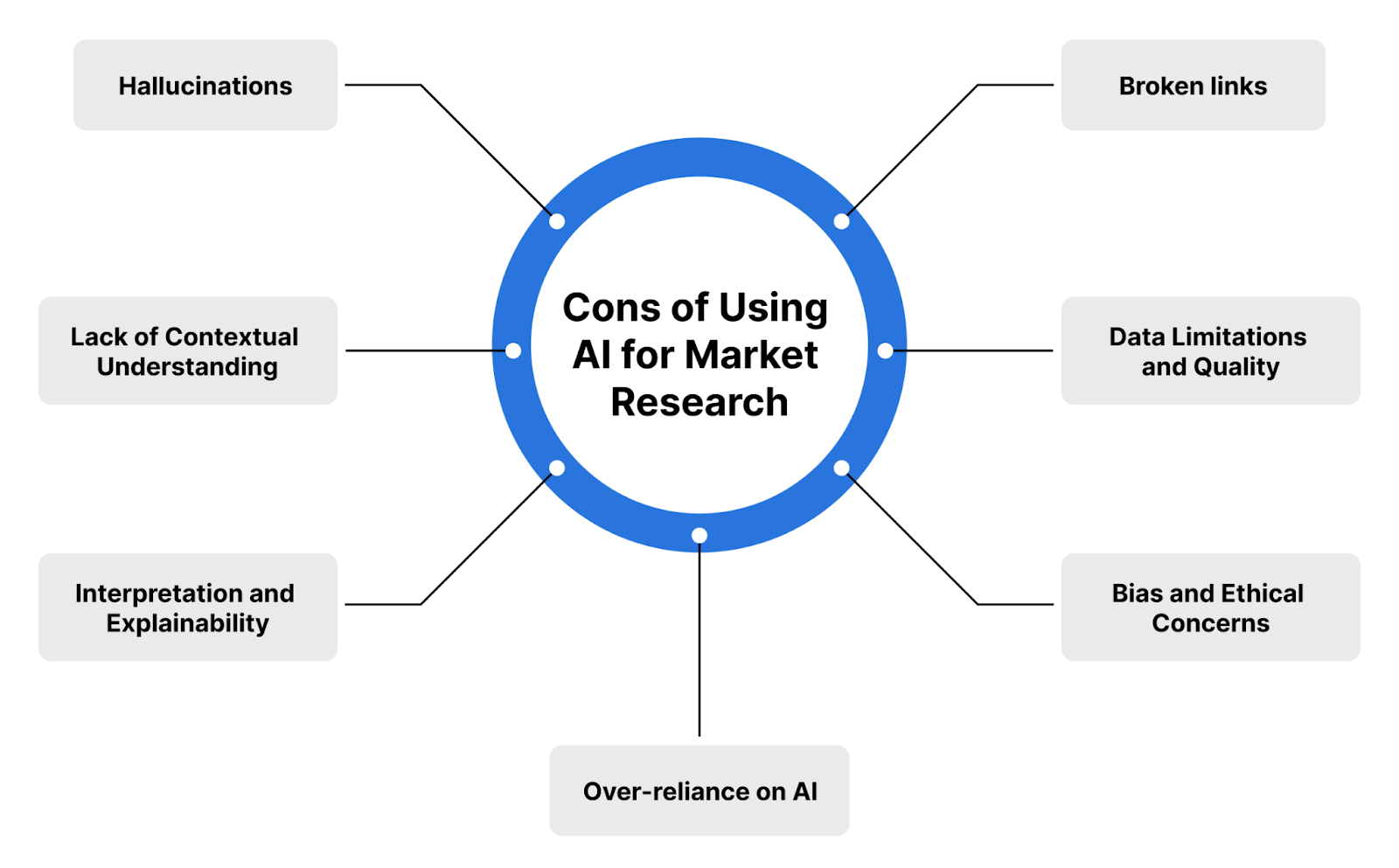
- Data limitations and quality – These models rely on the data that is used to train them, which can be limited, incomplete, biased or of low quality. If the AI tool does not have access to a larger pool of data, like the free version of ChatGPT, it directly impacts the research results you’re offered. If you’re a student trying to write a research paper, the limited information could put you behind in your course-work.
- Interpretation and explainability – Neural networks are complex structures and unknown entities, with the information on their decision-making process shrouded under secrecy. This becomes problematic as you can’t justify the reasoning behind your AI-generated results, especially to your boss if she asks.
- Overreliance on AI – While the results are mixed at the moment, there is a strong possibility of people developing a dependance on this technology. This reliance can be detrimental when the results are not completely foolproof, simultaneously impacting critical thinking, creativity and human nuance.
After reading this list, you might be tempted to save time and simply use a search engine. But that’s looking backwards. AI is a tool that exists for a reason, you just need to learn how to use it for yourself.
How should you research effectively?
AI is a developing technology and is prone to imperfections. Be aware of these limitations and use it as a tool, not a replacement for human judgment.
- Define your question – Strategies for success in research begin by knowing the right prompt for these AI tools. What do you want to learn? What are you trying to find out? How deep do you want to enter the topic? The more specific your question, the better AI can help you find the information you need.
- Use AI-powered tools to find relevant information – Go beyond the chat-based AI models that have become so popular. There are a number of platforms that can help you find applicable information - Google Scholar, Scopus, and Web of Science. You can identify relevant research articles, papers, and books.
- Use multiple sources – When conducting research, you shouldn’t rely on a single source of information. That’s a basic nugget of logic that anybody who’s researching should understand. Use a variety of sources, including academic journals, news articles, and government websites. This is an aspect we’ve learnt from our K12 days, but forgotten along the way.
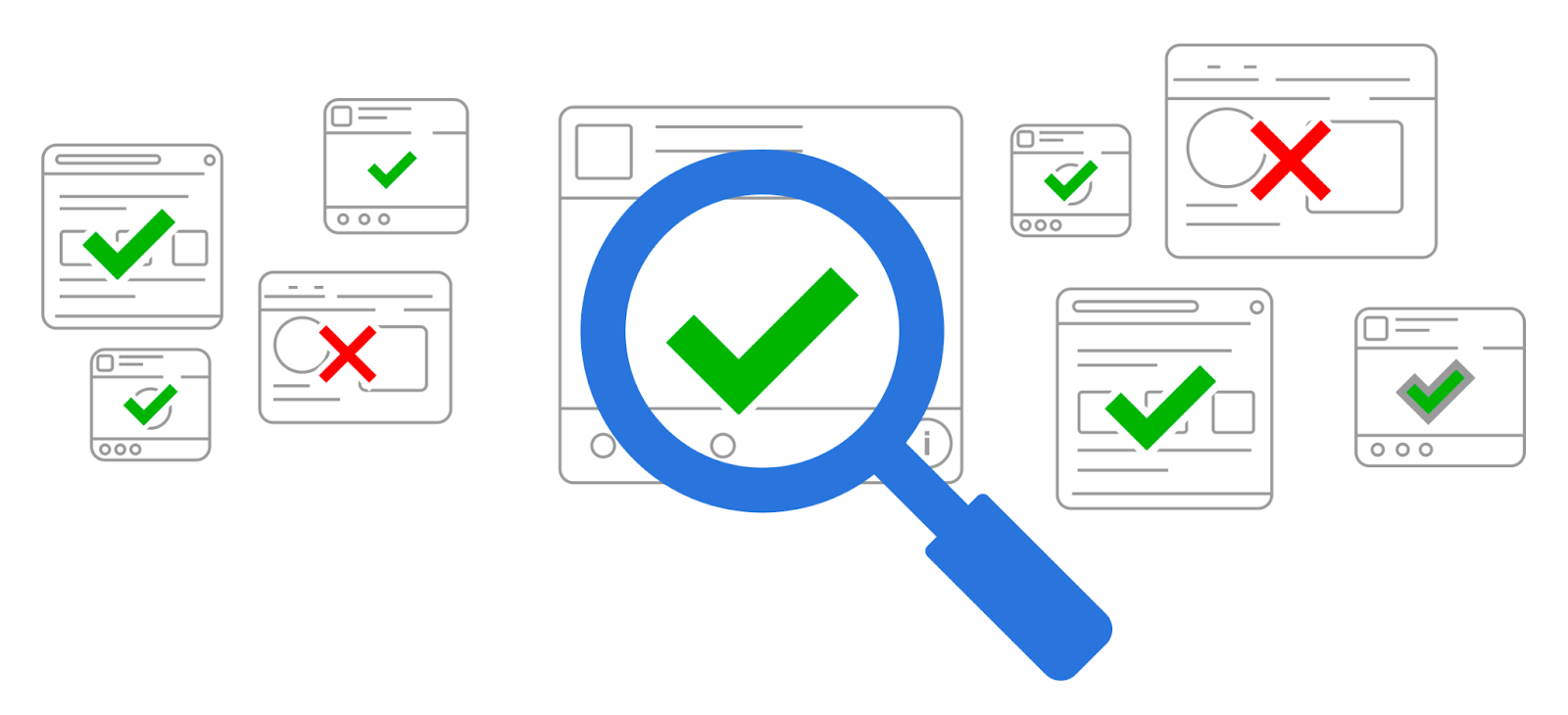
- Evaluate the information you find – Not every piece of information is created equal. It's vital to be critical of the information you find through AI, to ensure that it's trustworthy and reliable. The source of information, the author's expertise, the credibility and even the publishing date are factors to consider. You can also use fact-checking tools to double-check your information.
- Use AI to help you organize your research - AI can organize your research by creating summaries of articles, highlighting key points, and creating mind maps. It can analyze information and identify patterns, which can help you make sense of the content. It can further generate ideas, suggest citations, and check for plagiarism. This can free up your time to focus on the creative aspects of your work.
- Use it to complement not replace your research - Use AI to find information, but don't rely on it to do all the work for you. For example as a marketer, don’t use it to research your customer, but to conduct customer analysis. You can also use it to paraphrase and simplify your own research.
- Use AI to automate tasks - There are a number of AI tools that can be used to automate time-consuming tasks. You can automate segmenting and data collection through tools that are crawling the web for data, which can be analyzed and presented in an easily digestible format. This data visualization can come in handy for sentiment analysis as well, especially for social media and content research.
What are some tools you should use for research?
Instead of looking for one all-encompassing tool, you can choose from a long list of AI tools (and SaaS tools) that are commonly used for facets of research. Here are a few:
- Search and Discovery - - Google Scholar - A specialized search engine for scholarly literature, providing access to academic papers, theses, and conference proceedings. This might be relevant to a wider audience, especially if you’re writing your own academic papers. - Semantic Scholar - Uses AI algorithms to understand research papers and recommend related articles based on context and relevance.
- Language Processing - - ChatGPT - Known to almost everyone now, this language model can generate human-like text, answer questions, and assist with research tasks. - Bard - Google’s answer to Microsoft, this tool can also generate human-like text that will source information from their vast index of websites.
- Data Collection and Crawling - - Import.io - Helps in extracting data from websites and turning it into a structured format. This is relevant for content marketers and data scientists, but comes at a steep price. - Webz.io - Enables web data extraction and monitoring from various sources, including news articles, blogs, and social media. It can help content marketers understand how to refine their campaigns.
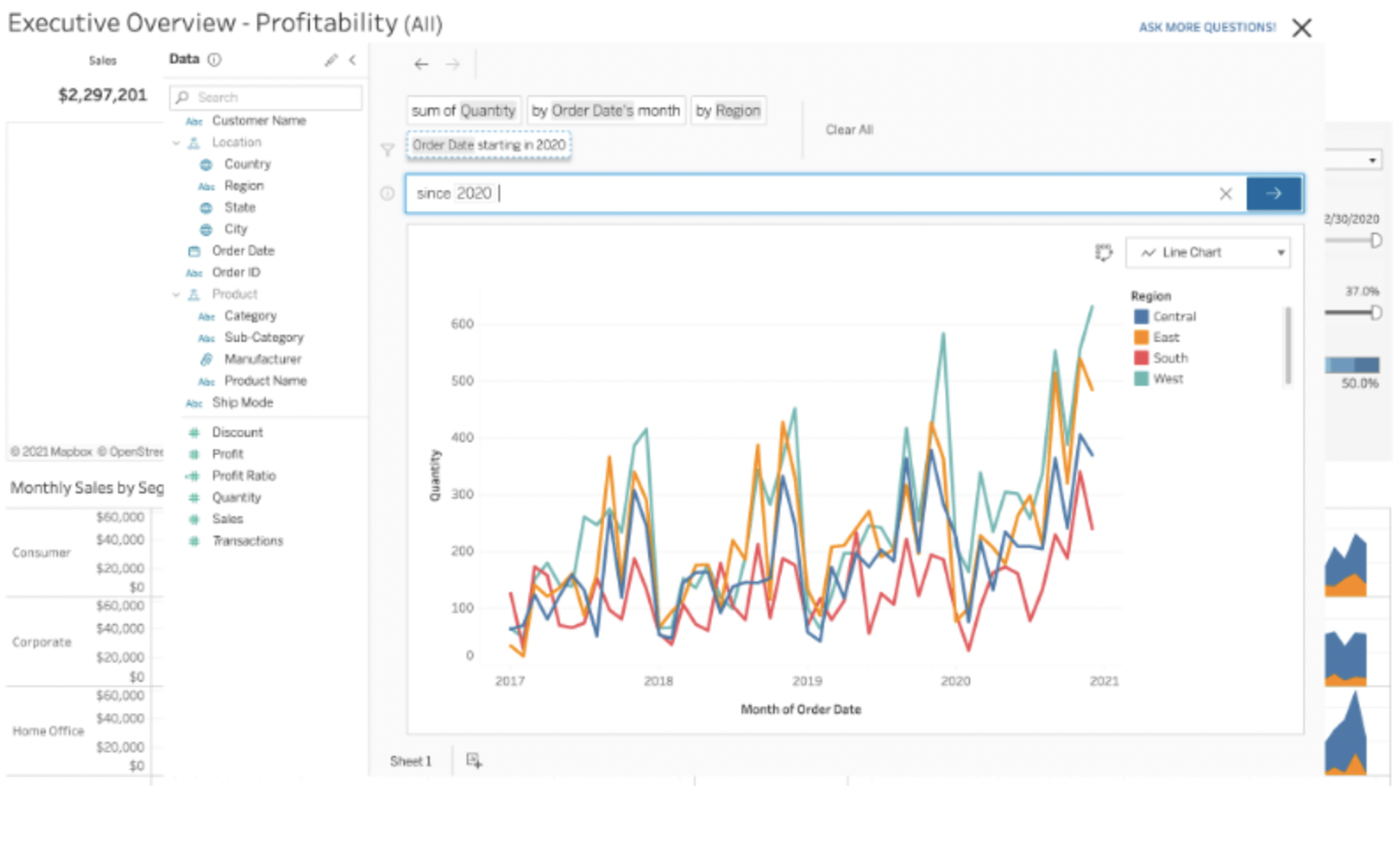
- Data Analysis and Visualization - - Tableau - When you’re trying to make sense of your data in a visual format, this tool can help. Start-up founders and content marketers can create interactive charts and graphs, with a dashboard to analyze and effectively present data. - Microsoft Power BI - Possibly a cheaper option, it provides AI-powered data analysis capabilities that can uncover actionable insights through pattern recognition. It has enterprise capabilities and can be integrated with Microsoft Excel as well.
- Research Management - - Zotero - A free tool that allows users to collect, organize, and cite research sources, including articles, books, and websites. This has wide ranging benefits for students, marketers, professionals and start-up founders. - EndNote - Helps organize and manage references, create citations, and collaborate with others on research papers. This can come in handy for academic researchers or professionals who’re creating high-value reports.
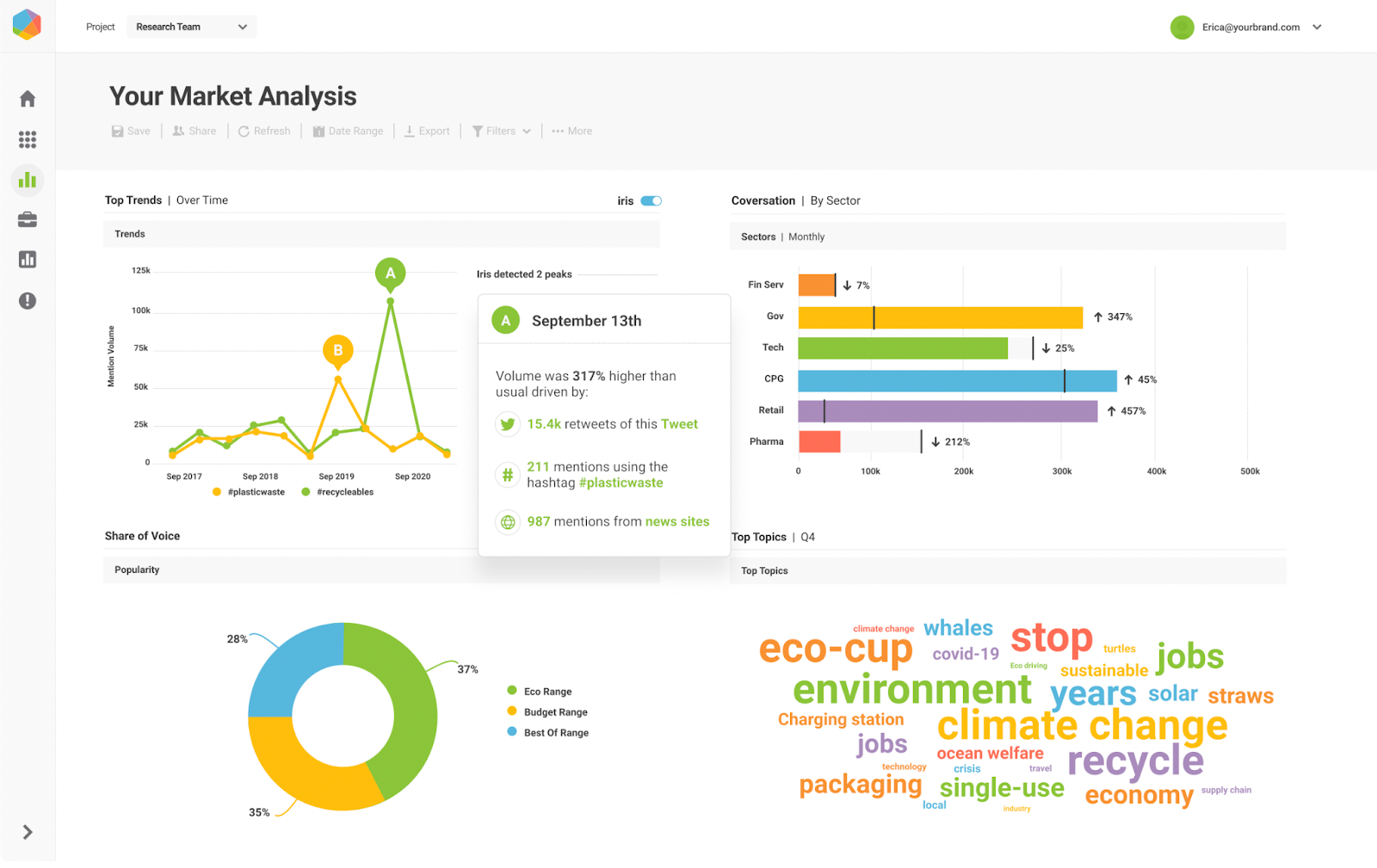
- Sentiment Analysis and Social Media Monitoring - - Brandwatch - Monitors social media platforms to analyze public sentiment, track brand mentions, and gather insights that challenge marketing studies. Influencers, social media writers, and content marketers can find this helpful. - Lexalytics - Offers sentiment analysis and text analytics solutions that enable researchers to understand and analyze opinions expressed in text data.
Along with AI-based search, you might want to consider offline research. This can help you understand the context of your AI research and define the problem you’re trying to solve. The unique data points you glean can supplement your AI findings, providing you with a method of differentiating your offerings.
Have you tried using AI for research? Write to us and share your experience.
Frequently Asked Questions
Is it safe to use AI to research topics?
It is safe when you treat AI as a starting point and verify its output, not as a source of truth. The biggest risks are hallucinated statistics, fabricated citations, and inherited bias, all of which can quietly wreck your credibility. Cross-check every claim against real sources before you rely on it.
What are the main risks of using AI for research?
The article flags seven: hallucinated facts, broken or non-existent citation links, training-data bias, weak contextual understanding, limited or low-quality data, the black-box problem of not being able to explain results, and overreliance that erodes critical thinking. Most are fixable by verifying output and using multiple sources. None of them mean you should avoid AI entirely.
Can AI make up sources and statistics?
Yes, and it does so confidently. Large language models routinely fabricate figures and invent citations that point to broken links or websites that never existed. One New York lawyer learned this the hard way after filing ChatGPT-generated cases that did not exist, which is why you fact-check every citation before using it.
Which AI tools are best for research?
Skip the search for one all-in-one tool and stack purpose-built ones instead. The article recommends Google Scholar and Semantic Scholar for discovery, ChatGPT for language tasks, Import.io and Webz.io for data collection, Tableau and Power BI for visualization, Zotero and EndNote for reference management, and Brandwatch or Lexalytics for sentiment analysis.
Should AI replace traditional research methods?
No. The article is clear that AI should complement human judgment, not replace it. Use it to find information, summarize articles, and automate grunt work, but still pull from academic journals, news, and government sources, evaluate credibility yourself, and add offline research to surface unique data points that set your work apart.
Sources
Keep reading
The archive →Generative AI's Impact on Developers
How generative AI is boosting developer productivity and accelerating task completion across engineering teams.
RESEARCHThe Impact of Artificial Intelligence (AI) on Market Research
AI is revolutionizing market research by empowering organizations to extract valuable data and uncover hidden patterns. Can AI become your perfect research assistant?
From The Cut
All takes →- Gemini API Pricing in 2026: The Operator Breakdown
- OpenAI vs Anthropic in 2026: Which Company Should You Build On?
- Perplexity vs ChatGPT in 2026: Which Wins for Real Research?
- The Best AI Agent Frameworks in 2026: An Operator's Ranking
- The Best AI Agents in 2026: What Actually Ships Work
- The Best AI Apps in 2026: The Ones Actually Worth Your Time