AI on Trial: How Air Canada's Chatbot Case Redefines Digital Accountability
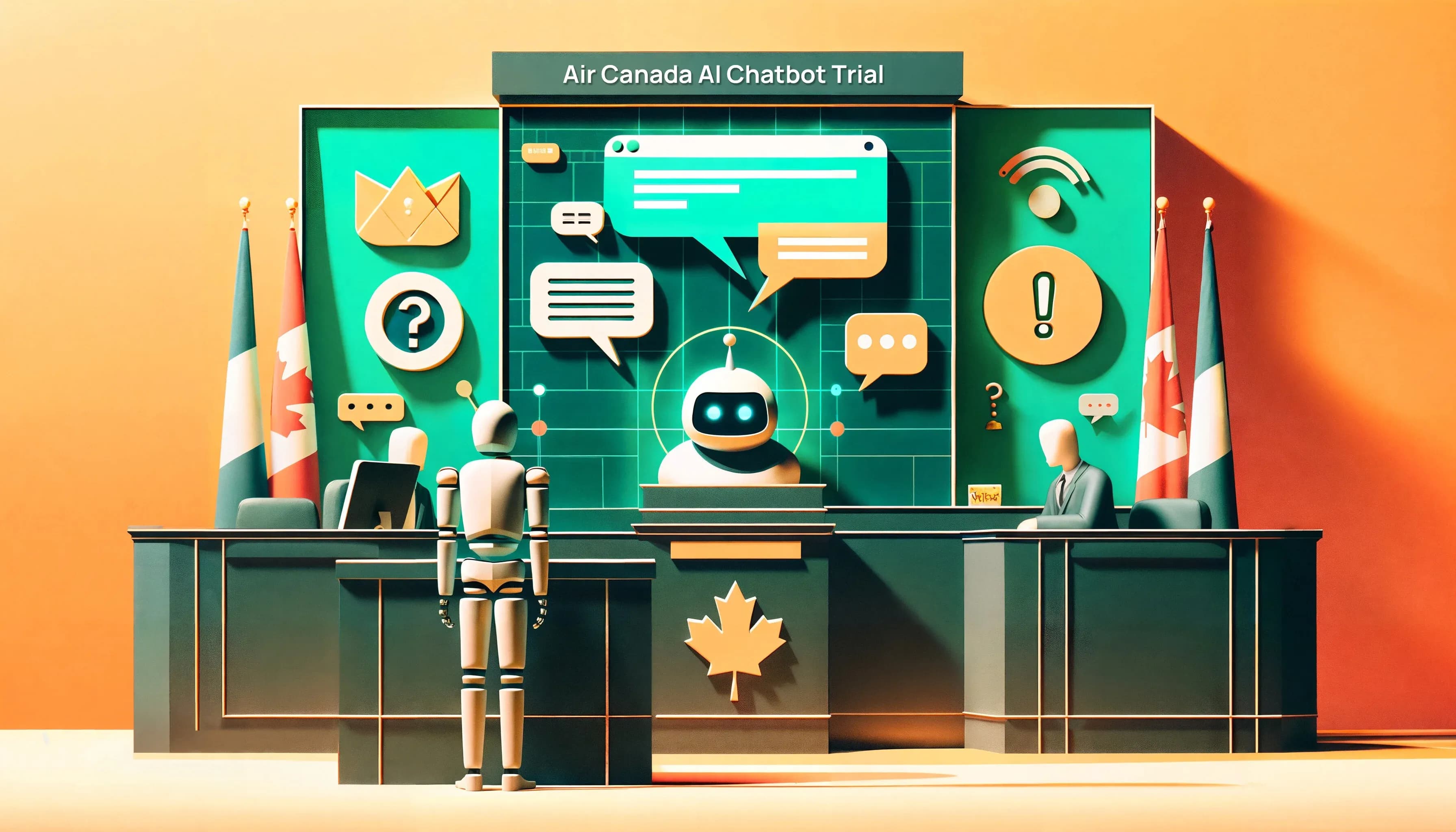
TL;DR
Air Canada's website chatbot told a grieving passenger he could claim a bereavement discount after booking. That was wrong, and when the airline refused to honor it, he took them to Canada's Civil Resolution Tribunal. In February 2024 the tribunal ruled the airline was liable for what its chatbot said and ordered it to pay. The case set a clear precedent: your AI speaks for you, and you own its mistakes.
“My chatbot did it, not me.” Companies won’t be able to hide behind this excuse anymore. The Canadian Tribunal verdict on the recent case of Air Canada vs. Jake Moffatt, is a milestone in the question of who is liable for the misinformation provided by AI chatbots. It also raises a question, can we trust AI responses and information?
What happened between Jake Moffatt and Air Canada’s AI chatbot?
When done right, adopting an AI chatbot can bring you success - Bank of America’s Erica chatbot or Sephora’s Virtual Artist redefined customer engagement and experience. However, Air Canada ran into a glitch with its AI chatbot (on its website), as was revealed during the verdict of Jake Moffatt vs Air Canada, earlier in February 2024. It started when in November 2022, Jake Moffatt was booking a round-trip from Vancouver to Toronto after his grandmother passed away. He had asked the Air Canada chatbot about the bereavement discount policy. The AI chatbot informed Moffatt that to claim bereavement discounts he needed to submit a refund application form within 90 days of his date of travel. However, this wasn’t actual company policy. In reality, Moffatt was supposed to submit the application before taking his flight. On returning from his trip, Moffatt filed for a partial refund of about USD 326. He was informed by the human customer representative that he wasn’t eligible for the refund as he was too late in filing. That’s when he found out that the chatbot had given him incorrect information. This resulted in:
- Weeks of email exchange between Moffatt and the airline, with no resolution. The airline did mention in their emails that they would update the chatbot’s policy information.
- Since the issue was not resolved, in February 2023, the matter was submitted to CRT (Civil Resolution Tribunal) - a quasi-judicial system in the British Columbia public justice system that is responsible for minor civil law disputes.
The case: Jake Moffatt vs Air Canada
During the proceedings, the argument presented by Air Canada was that the chatbot “is a separate legal entity and responsible for its own actions.” To which, tribunal member Christopher C. Rivers responded,
Finally, in this unprecedented case, a verdict was made in favor of Jake Moffatt, and Air Canada was ordered to refund USD 483, plus tribunal and interest fees, “for which Moffatt had been fighting for nearly a year and a half”. In summary, Rivers in his decision mentioned:
- Air Canada is responsible for all the information on their website; doesn’t matter if it is from a static page or a chatbot.
- Air Canada did not take enough care and responsibility to ensure that the chatbot’s response was accurate.
- Air Canada did not provide a suitable explanation of why a user/customer needs to validate the information provided by the chatbot, which is a part of the same website.
The true verdict came from Air Canada, who seemed to have decommissioned their chatbot on the website. It’s one of the first cases where AI has been replaced by humans.
Lessons for brands using AI chatbots on websites and as customer service
As per a survey, 44% of consumers appreciate the use of AI chatbots as shopping assistants and in helping find product information before the actual purchase. However, the case of Air Canada highlights the importance of having AI guidelines to ensure accountability and accurate information. Below are the points that brands must address before employing AI chatbots on websites or in customer service:
- Company accountability: Brands need to stay accountable for the actions of their AI chatbots. Companies cannot distance themselves and argue that the chatbot is a separate entity. Brands need to be ethically accountable for their chatbots' actions and responses while ensuring that unassuming customers are aware of a chatbot's limitations.
- Human intervention: When AI chatbots provide incorrect information, customers should have an easy method to speak with a human who can resolve their issues. This is especially true for complicated policies, offerings, and services, where access to a human agent can enhance customer satisfaction. This would ensure no false promises are made to the customer, as with Jake Moffatt.
- Monitoring and improvement: Deploying an AI tool, like a chatbot, is not a set-it-and-forget-it solution. It requires continuous monitoring and updating for information accuracy as per customer needs and expectations, as well as the changes in the tech. Brands deploying AI chatbots need to have regular reviews and adjustments of AI chatbot responses based on customer feedback and evolving company policies.
What are your thoughts on using AI chatbots in customer service? Let us know your thoughts.
Sources
Frequently Asked Questions
What happened in the Air Canada chatbot case?
A passenger, Jake Moffatt, asked Air Canada's chatbot about bereavement fares after his grandmother died. The bot told him he could book now and apply for the discount within 90 days, which was false. Air Canada later refused the refund, so Moffatt filed a claim and won.
Is a company legally responsible for what its AI chatbot says?
Yes. The tribunal rejected Air Canada's argument that the chatbot was a separate entity responsible for its own answers. It ruled that the chatbot is part of the company's website, so the company is responsible for all of it, including the bot. If your AI says it, you own it.
How much did Air Canada have to pay?
The tribunal ordered Air Canada to pay Moffatt about 650 Canadian dollars in damages, plus tribunal fees and interest. The dollar figure was small. The precedent it set for every business running a customer-facing chatbot was not.
What does this case mean for businesses using AI chatbots?
It means you cannot hide behind your bot. Any promise, price, or policy your chatbot states can be held against you as if a human employee said it. Treat chatbot output as official company communication, because a court already has.
How can a company avoid chatbot liability?
Ground the bot in your real, current policies instead of letting it improvise, and test it on the edge cases that cost money, like refunds and discounts. Add clear disclaimers, log conversations, and give a fast path to a human. The goal is fewer confident wrong answers, not zero automation.
Keep reading
The archive →11 AI Tools Content Creators Actually Use
A practical rundown of the 11 AI tools content creators actually use day to day, from scripting to video and image generation.
AI TOOLSInVideo AI Review (2026): Is It Actually Worth It?
Hands-on 2026 review of InVideo AI covering features, pricing, and real performance. Learn how its text-to-video generation, AI voiceovers, voice cloning, and Sora 2 and VEO integration perform in practice.
AI TOOLSAI vs. Automation
Artificial Intelligence (AI) and Automation are transformative technologies often used interchangeably but serve distinct purposes. Automation excels at executing repetitive, rule-based tasks efficiently.
From The Cut
All takes →- Claude Sonnet vs Haiku in 2026: When the Cheapest Claude Wins
- Claude vs ChatGPT in 2026: The Honest Operator Comparison
- Claude vs Gemini in 2026: Which One Should Your Team Pay For?
- Claude vs Perplexity in 2026: Different Tools for Different Jobs
- Cursor vs GitHub Copilot in 2026: Which One Earns the Seat?
- Cursor vs Windsurf in 2026: Which AI Editor Earns the Seat?