Beauty and the Bot: How Sephora Reimagined Customer Experience with AI
TL;DR
Sephora turned AI into a core retail strategy, not a gimmick. Starting with the 2016 Virtual Artist app built with ModiFace, plus a Facebook Messenger booking bot and AI-powered SEO landing pages, it grew online net sales from $580M in 2016 to over $3B in 2022. The lesson for founders: pick the right tech partner, move fast across teams, and keep the experience consistent online and in-store.
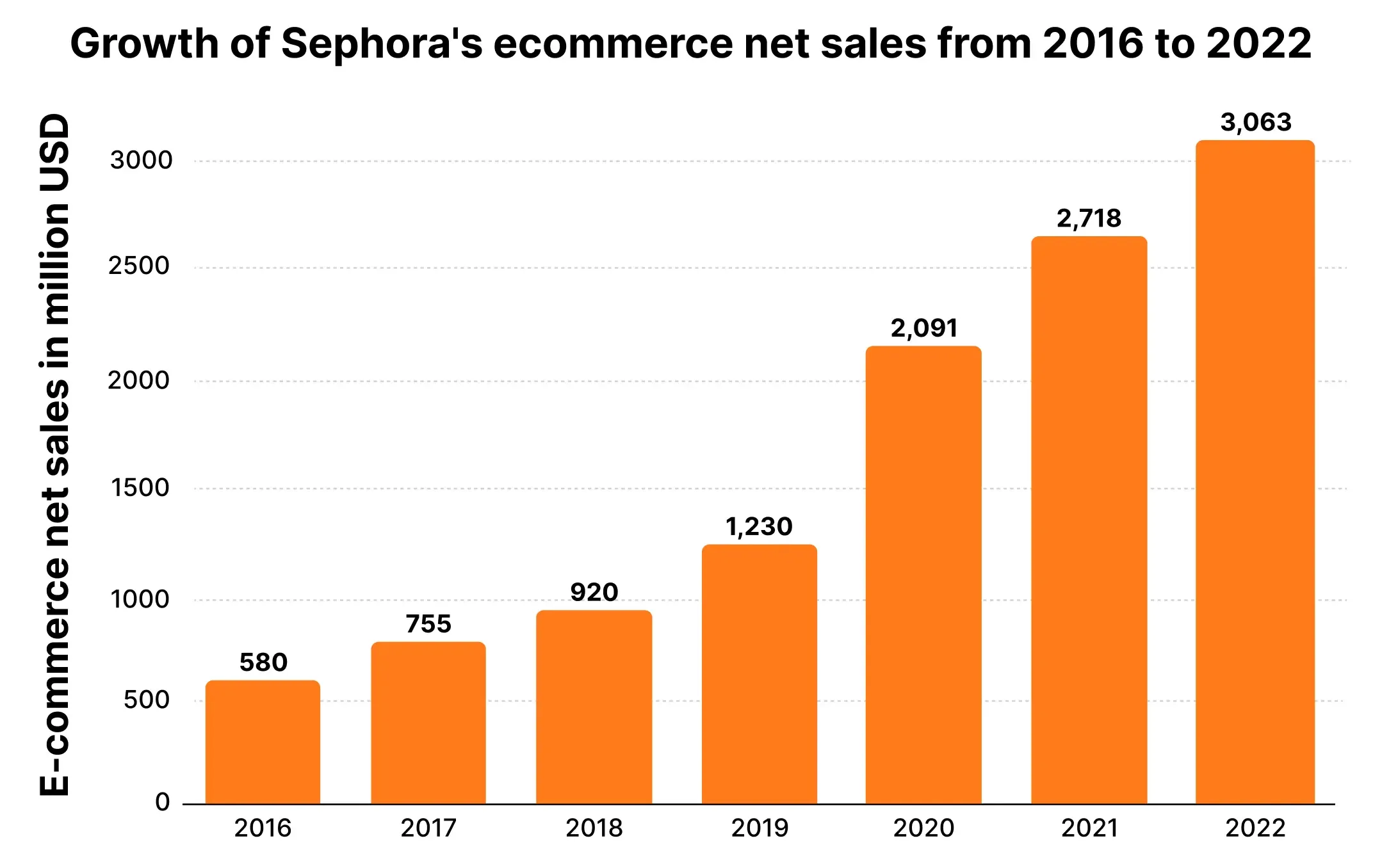
From AI-driven product recommendations to virtual try-ons, Sephora has not just adapted to the AI and digital era, it has redefined it. This has established Sephora as a trailblazer in the beauty retail industry - creating a customer experience that is as unique as the individual. Since launching their first AI-powered chatbot in 2016, Sephora Virtual Artist, Sephora has moved beyond traditional over-the-counter sales to embrace a more interactive, customer-centric approach. The result: With AI and digital innovations, Sephora was able to reach a large customer base, grow brand loyalty, and increase its e-commerce net sales from USD 580 million in 2016 to over USD 3 billion in 2022 - representing a 4x increase in online sales over six years.
What made them take on the AI transformation?
Source Sephora has been quick to catch on to changing consumer trends, with an openness to invest in tech that matches the evolving customer’s needs and preferences. This highlights their commitment to customers and to their legacy of digital innovation. For instance, when Sephora noticed more consumers conducting in-depth product searches, they strategically leveraged AI in search engine optimization to enhance customer outreach with AI-generated landing pages. These pages were tailored to specific queries like 'best foundation for sensitive skin', and offered relevant, personalized content to potential customers. It resulted in a 6% increase in organic search visibility for effective keywords from Q4 2018 to Q2 2019. Additionally, Sephora released other AI tools and digital innovations, providing a blueprint for brands that were looking to refine their digital strategies.
Sephora’s AI transformation journey in the retail industry
Sephora had been an early adopter of technology and has continually included it in their overall strategy. For instance, they launched their first website in the US in 1999. In 2015, Sephora launched the Sephora Innovation Lab, which marked the beginning of AI technology integration within their strategies. This lab pooled together executives from product, design, and marketing to create customer experiences that revolutionized the beauty retail industry. Along with their technology partner, ModiFace, Sephora Innovation Lab employed these AI chatbots and assistants:
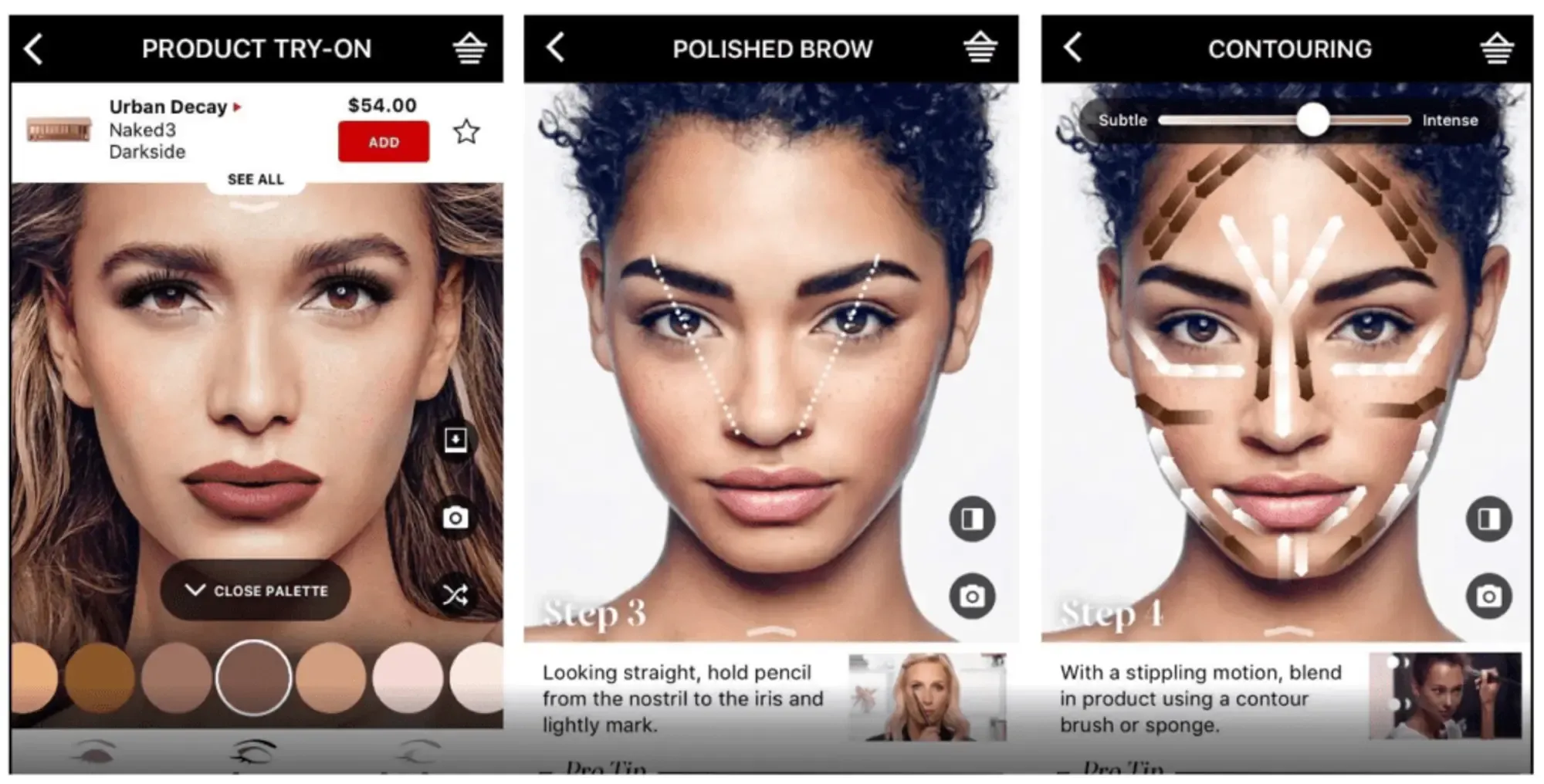
- Sephora Virtual Artist: Deemed as the most innovative and accessible mobile offering, it used AR technology, allowing customers to try thousands of Sephora products right from the mobile app, making it a highly interactive and personalized experience. In fact, by 2018, i.e., within 2 years of launching the app, Sephora Virtual Artist saw over 200 million shades tried on, and over 8.5 million visits to the feature.
- Sephora Color Match: assisted customers in shade matching and provided product recommendations across Sephora's range of products. It allowed users to try different shades in real-time and buy the product directly from Sephora’s website/mobile app.
- Sephora Reservation Assistant: Launched in late 2016, this assistant was integrated into Facebook Messenger. It helped customers with makeup appointments at Sephora stores. In less than 2 years, Sephora saw an 11% increase in booking rates and a reduction in the number of steps involved in booking an appointment. It largely translated into increased customer satisfaction and in-store spending.
Moreover, Sephora’s AI transformation was complemented by several innovative strategies, such as an omnichannel retail strategy. Keeping consistent and personalized customer engagement at the core, they followed an omnichannel retail strategy. This allowed them to ensure a seamless shopping experience by integrating online, mobile, and in-store interactions into a singular experience. Here are their products and offerings:
- Beauty Hubs: Integrated in-store interactive mirrors and iPad stations for virtual product trials with AR technology, enhancing the omnichannel experience.
- Sephora Studio: Designed for neighborhood shopping streets, these smaller studios offer a digitalized retail experience with advanced features like mobile POS systems, catering to changing consumer shopping habits.
- Personalization and Data Utilization: Used AI to personalize shopping experiences with data-driven product recommendations, making each customer's journey unique.
3 AI-powered features that drove Sephora’s success
Before launching Sephora Virtual Artist, Sephora partnered with ModiFace and experimented with AR for five years. Even after launch, they were committed to bringing the latest features and upgrades to the app aligned with their customer’s needs and preferences. They released new add-ins or expanded to other platforms every four months.
- Facial recognition and customized tracking of facial elements: The core technology behind Sephora’s AI chatbot was its ability to track facial features accurately. The software could measure the position of eyes and lips in real-time, enabling it to precisely apply eye shadow and lipstick on the user’s face.
- Skin tone analysis: ModiFace technology enabled the AI chatbot to analyze the user's skin tone and accordingly recommend products. It also used customer preferences, purchase history, and other interactions to provide an individualized shopping experience.
- Matching virtual experience with real: ModiFace and Sephora’s teams worked together to ensure that every virtual product matched with the real product, right down to the tint and gloss. This removed any discrepancy when the customer received the product or picked it from the store.
Source
So, what can other brands learn from Sephora (even outside of the retail industry)
- Choosing the right (tech) partner: Besides building their team under Sephora Innovation Lab, Sephora partnered with ModiFace, Facebook, Pantone, etc. to launch new AI products and features that helped them tap into a larger pool of tech talent. This enabled them to roll out upgraded services and a tailored experience for their user base.
- Using inter-departmental skills to take quick action: Gaining insights and understanding customer needs is straightforward, but the challenge lies in swiftly acting on this data. Sephora’s Innovation Lab was a collaboration of executives from marketing, product development, and technology. They focused on rapidly sourcing, developing, evaluating, and launching new initiatives.
- Omnichannel consistency: By leveraging the right mix of AI technology and human interaction, Sephora succeeded in creating a unified experience throughout their platform. A user would find a similar experience online as they would at the store.
Evolution of Sephora's website over the years. They adapted to changes in customer needs, preferences, and technological advancements
Overall, Sephora’s AI transformation demonstrates how leveraging technology can create a more engaging, personalized, and efficient retail experience. It can strengthen a brand's connection with its customers and enhance its market position. Do you know of a brand that strategically integrated AI tools and chatbots with great results? Let us know, we would love to hear about it.
Frequently Asked Questions
How did AI actually grow Sephora's revenue?
Sephora's e-commerce net sales jumped from $580 million in 2016 to over $3 billion in 2022, roughly a 4x rise in six years. That growth tracked with its rollout of AI tools like the Virtual Artist try-on app, a Messenger booking bot, and AI-generated SEO landing pages. The point is that the AI was tied to real shopping behavior, not bolted on for show.
What was Sephora Virtual Artist and how popular did it get?
Virtual Artist was an AR-powered app, launched in 2016 and built with ModiFace, that let customers try on thousands of makeup shades through their phone camera. By 2018, within two years of launch, it had logged over 200 million shades tried on and more than 8.5 million visits. It used facial tracking and skin-tone analysis to match virtual looks to the real products.
Did Sephora's Facebook Messenger chatbot really improve bookings?
Yes. The Reservation Assistant, launched in late 2016 inside Facebook Messenger, helped customers book in-store makeup appointments in fewer steps. In under two years it drove an 11% higher booking rate than channels like calling or booking on the website, and customers who booked through it spent over $50 in-store on average.
Who did Sephora partner with to build its AI features?
Sephora's main AR and AI partner was ModiFace, the company behind its facial recognition, skin-tone analysis, and shade-matching tech. It also worked with Facebook, Pantone, and its own in-house Sephora Innovation Lab, launched in 2015. Pulling in outside talent let it ship upgraded features roughly every four months.
What can a small brand actually learn from Sephora's AI playbook?
Three things, and none of them require a Sephora-sized budget. Pick the right tech partner instead of building everything yourself, get marketing, product, and engineering acting on customer data quickly, and keep the experience consistent across online and in-store. The goal is using AI to make the customer journey smoother, not to chase the trend.
Sources
- Statista: sephora.com e-commerce net sales grew from $580M in 2016 to ~$3.06B in 2022
- TechRepublic: Sephora Virtual Artist logged 200M+ shades tried on and 8.5M+ visits; ModiFace partnership and AR strategy
- Indigo9 Digital: Sephora Messenger Reservation Assistant drove an 11% booking-rate increase and $50+ average in-store spend
- Harvard D3 (Digital Innovation and Transformation): Sephora Innovation Lab launched 2015, ModiFace partnership, and digital strategy
- PR Newswire: Sephora Virtual Artist adds virtual try-on of thousands of eyeshadow shades, new looks, and tutorials
Keep reading
The archive →11 AI Tools Content Creators Actually Use
A practical rundown of the 11 AI tools content creators actually use day to day, from scripting to video and image generation.
AI TOOLSInVideo AI Review (2026): Is It Actually Worth It?
Hands-on 2026 review of InVideo AI covering features, pricing, and real performance. Learn how its text-to-video generation, AI voiceovers, voice cloning, and Sora 2 and VEO integration perform in practice.
AI TOOLSAI vs. Automation
Artificial Intelligence (AI) and Automation are transformative technologies often used interchangeably but serve distinct purposes. Automation excels at executing repetitive, rule-based tasks efficiently.
From The Cut
All takes →- Claude API Pricing in 2026: What You'll Actually Pay (And How to Cut It in Half)
- Claude Code vs Cursor in 2026: Which AI Coding Tool Should You Use?
- Claude Code vs GitHub Copilot in 2026: Two Different Shapes of the Same Job
- Claude Fable 5 vs Opus 4.8: When the Cheaper Claude Actually Wins
- Claude Opus vs Sonnet (4.8 vs 4.6): Which One Do You Actually Need?
- Claude Sonnet vs Haiku in 2026: When the Cheapest Claude Wins