How to use ChatGPT to Create a Content Marketing Strategy

TL;DR
ChatGPT can support a content marketing strategy across seven stages: defining your audience, running a content audit, generating ideas, building a calendar, picking distribution channels, drafting content, and monitoring performance. The catch is it works best as a collaborator, not a replacement. Set your goals first, keep a human checking quality and brand voice, and treat AI output as a fast first draft you refine.
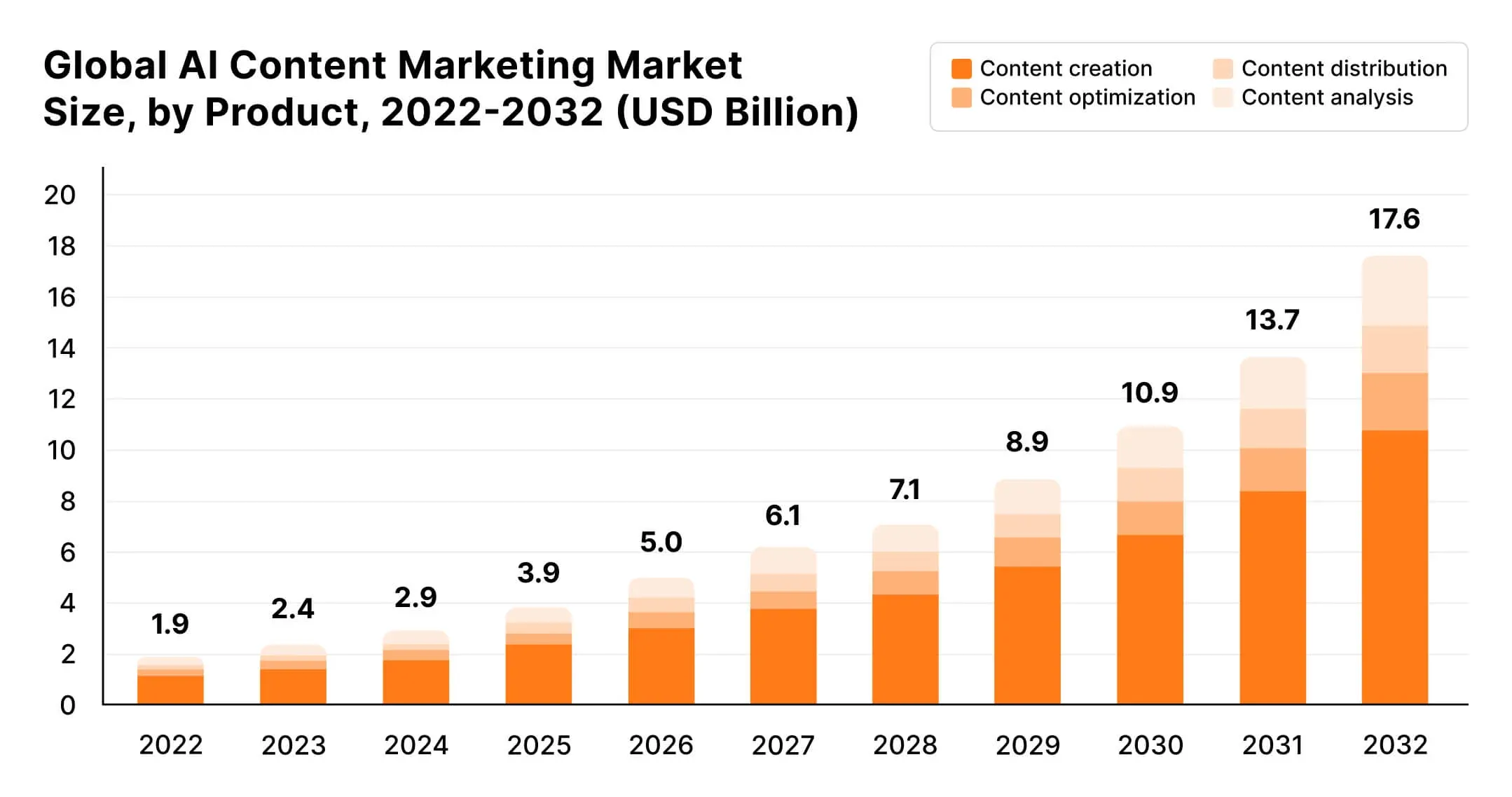
When 70% of marketers believe that generative AI is important for their content marketing strategy, it’s something to stop and think about. AI is finding use in all facets of content marketing, with content creation being the most common activity. The global AI content marketing market is projected to grow at a CAGR (compound annual growth rate) of 25.68%, reaching $17.6 billion by 2032 from $1.9 billion in 2022. Considering the inevitable role of AI in content marketing, integrating AI tools like ChatGPT into your entire workflow can become a strategic move.
ChatGPT and AI in content marketing strategy
Before you start working with ChatGPT, ensure that you’ve defined the goals and objectives of your content marketing strategy. Once that’s done, then you can use AI to:
1. Define your target persona or audience
It all starts with knowing your audience. By enabling different plugins, ChatGPT can scrape the internet and gather real-time data from various sources to provide a comprehensive view of your audience. You can instruct it to identify trends, concerns, and interests of a group that align with your content goals. The insights obtained through this analysis can further enhance your goals and fine-tune the KPI metrics.
Prompt examples:
2. Run a content audit
Adding a content audit in your strategy process allows you to conduct a thorough evaluation of your content across all channels. This typically involves creating an inventory of all content, categorizing it, assessing its quality, and analyzing its performance / SEO effectiveness.
Prompt examples:
3. Generate content ideas targeting your audience group
By using goals and target audience, you can prompt ChatGPT to generate content ideas. You can also specify industry trends to explore. Treat ChatGPT as a partner for brainstorming, with access to extensive data and intelligent processing. This interaction can yield a rich array of content ideas, which can be further refined and integrated into your content strategy, ensuring it remains fresh, relevant, and engaging.
Prompt examples:
4. Develop a content calendar
A content calendar is a roadmap for creating, publishing, and promoting content. It helps organize and schedule content ideas based on factors like the target audience, industry trends, resources, and past engagement data. By providing ChatGPT with more data, it can optimize your publication schedule and suggest the best times for publishing different types of content. With its analytical capabilities, ChatGPT ensures that your content calendar is not only filled but also structured intelligently to maximize engagement and reach.
Prompt examples:
5. Determine distribution channel
ChatGPT can identify the right content distribution channels to ensure your content reaches the right audience and achieves its intended impact. By analyzing data on audience online behavior and past content distribution performance metrics, it can recommend the most effective channels for your content. This expands the reach of your content and strategically positions it on platforms where your target audience is most engaged and receptive.
Prompt examples:
6. Content creation
ChatGPT excels in content ideation by generating diverse ideas, helping with content outlining, and creating drafts. It can also help edit and generate content that aligns with your target audience and integrates your brand voice.
Prompt examples:
7. Continuous monitoring of content performance
To facilitate the continuous monitoring of your content performance, ChatGPT can analyze metrics, suggest optimizations, offer predictive analytics insights, and even propose A/B testing ideas. This comprehensive approach streamlines content strategy, ensures high-quality content production, and empowers data-driven decision-making to improve content effectiveness over time.
Prompt examples:
If content marketers want to stay relevant and keep up with this new AI age, they need to possess a new set of skills.
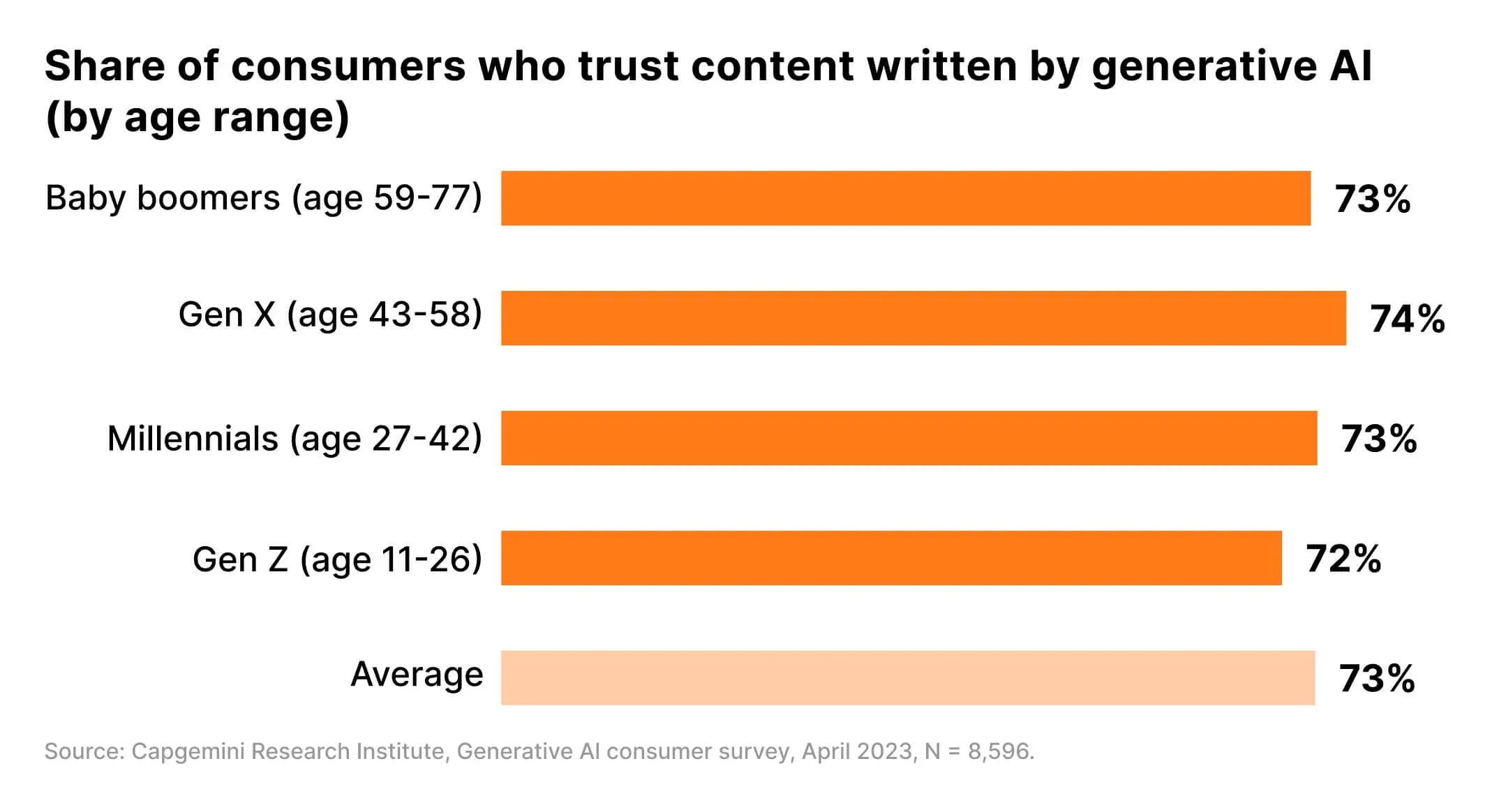
ChatGPT is a formidable tool for content strategists, with one study indicating the growing trust of consumers in AI-generated content. Using AI in content marketing allows you to make faster data-driven decisions, while gaining a deeper understanding of audience preferences and engagement patterns. However, it's important to be vigilant about the quality and relevance of the insights provided by ChatGPT.
Working with ChatGPT should be a collaborative effort. Human nuances of understanding the audience and knowing their preferences should always be paramount in maintaining your content’s unique voice and narrative consistency.
Do you think AI should be used for content strategy?
Write to us.
Frequently Asked Questions
Can ChatGPT actually build a full content marketing strategy on its own?
Not on its own. The article frames ChatGPT as a collaborator that speeds up seven stages of strategy work, from audience research to performance monitoring, but it expects you to define your goals and KPIs first. Human judgment on quality, relevance, and brand voice stays paramount, so treat its output as a fast first draft you refine.
What parts of a content strategy can ChatGPT help with?
The article lists seven: defining your target persona, running a content audit, generating content ideas, building a content calendar, determining distribution channels, creating content, and continuously monitoring performance. For each, ChatGPT can analyze data and suggest options, but you supply the goals and the final editorial call.
How much do marketers actually rely on AI for content marketing?
It is mainstream, not fringe. Around 70% of marketers consider generative AI important to their content marketing strategy, and nearly 70% have already integrated AI into their work, up from roughly 61% two years earlier. Content creation is consistently the most common AI use case, with about 85% of AI-using marketers applying it there.
How fast is the AI content marketing market growing?
Fast. The global AI content marketing market is projected to grow from about $1.9 billion in 2022 to $17.6 billion by 2032, a compound annual growth rate of 25.68% according to Market.us. Content creation is the dominant segment, which lines up with it being the most common AI activity marketers report.
What is the biggest risk of using ChatGPT for content strategy?
Trusting the output blindly. The article warns you must stay vigilant about the quality and relevance of ChatGPT's insights, since the model can be confidently wrong. Keep a human reviewing for accuracy, audience fit, and narrative consistency so your content keeps a unique voice rather than sounding generic.
Sources
Keep reading
The archive →Case Study - How Khan Academy Leveraged AI to Change Education
Explore how Khan Academy's AI tutor, Khanmigo, uses GPT-4 to deliver personalized education. Discover its features, real-world impact, and challenges in our latest case study.
AI CONTENTGenerative AI Can Enhance the Quality of Professional Writing by 18%
A new study shows professional writers using ChatGPT improved writing quality by 18% and reduced writing time by 37%. Here is a detailed look at how AI can transform writing.
AI CONTENTCan AI-Generated Content be Trusted? Lessons from CNET's AI Debacle
CNET's AI-generated content controversy highlights the importance of factual accuracy and ethics. Brands need to be vigilant, establish clear AI policies, and maintain transparency.
From The Cut
All takes →- Best AI for Customer Support in 2026: The Operator Picks for Lean Teams
- Best AI for Data Analysis in 2026: The Operator Ranking
- Best AI for Marketing in 2026: The Operator Stack for Lean Teams
- Best AI for Research in 2026: The Honest Operator Ranking
- Best AI for Writing in 2026: The Honest Operator Ranking
- Best Free AI Tools in 2026: What You Can Actually Build Without Paying