Perplexity AI vs ChatGPT: Which AI Tool You Should Choose in 2024?
TL;DR
Perplexity AI and ChatGPT both run on GPT-4, but they solve different jobs. Perplexity is a search-first answer engine that pulls live web results and cites every source, so it is built for research and current facts. ChatGPT is a conversational generator that wins on dialogue, content creation, and image generation. Both have free tiers and cost $20 a month for the paid plan, so pick the tool that matches the work, not the hype.
Briefly, Perplexity AI is an AI-powered online search assistant that focuses on in-depth search and provides reliable information with citations, while ChatGPT excels at engaging in conversation, responding to complex dialogue, and generating contextually accurate text and images.
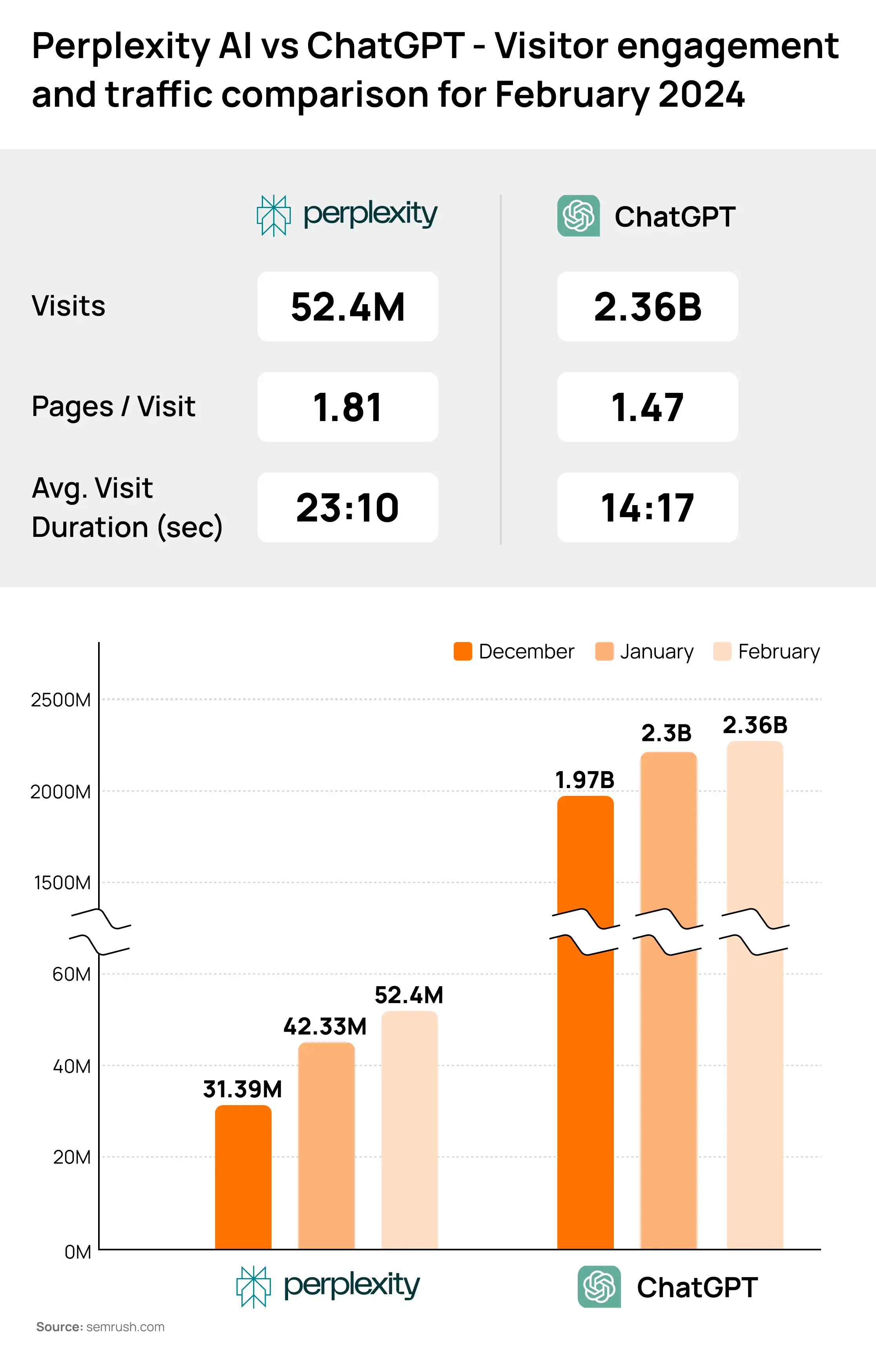
ChatGPT dominates the generative AI market and has inspired whitepapers, reports, and even memes. However, it is far from perfect and users have raised numerous concerns about the efficacy and reliability of the generated information. Enter Perplexity AI, a new contender aiming to address these accuracy concerns with its own generative AI tool. But can Perplexity AI bridge the gap and dethrone the current leader? Perplexity AI has seen a steady gain in popularity, with a 23.8% increase in website visits just within February 2024, as compared to ChatGPT’s 2.85%. As of January 2024, Perplexity has over 10 million active monthly users - indicating a growth rate of 1,000x in a year. What's the reason behind Perplexity AI's popularity?
Comparison: Perplexity AI vs ChatGPT
Both Perplexity AI and ChatGPT are large language models (LLMs) with distinct capabilities and features. While Perplexity AI operates like an intelligent search engine, scanning the internet for answers and providing citations, ChatGPT excels in content generation, offering a conversational interface for coherent, human-like responses. Here’s a brief comparison between them:
Perplexity AI | ChatGPT | |
|---|---|---|
Investors | Notable investors include Jeff Bezos and Nvidia | Owned by OpenAI whose biggest investor is Microsoft |
Language models | GPT 3.5, GPT 4, Claude 2.1,Gemini Pro and Perplexity | GPT 3.5 & GPT 4 |
Voice chat | Yes, only in mobile application | Yes, only in mobile application |
Image generation | Yes | Yes |
File upload | Yes, available on paid but it also allows limited uploads on a free plan | Yes. Available only with ChatGPT Plus |
Real-time information | Yes | No, unless prompted |
Citation | Yes | No, unless prompted |
Free plan? | Yes | Yes |
Paid plan pricing | $20 per month | $20 per month |
Perplexity AI
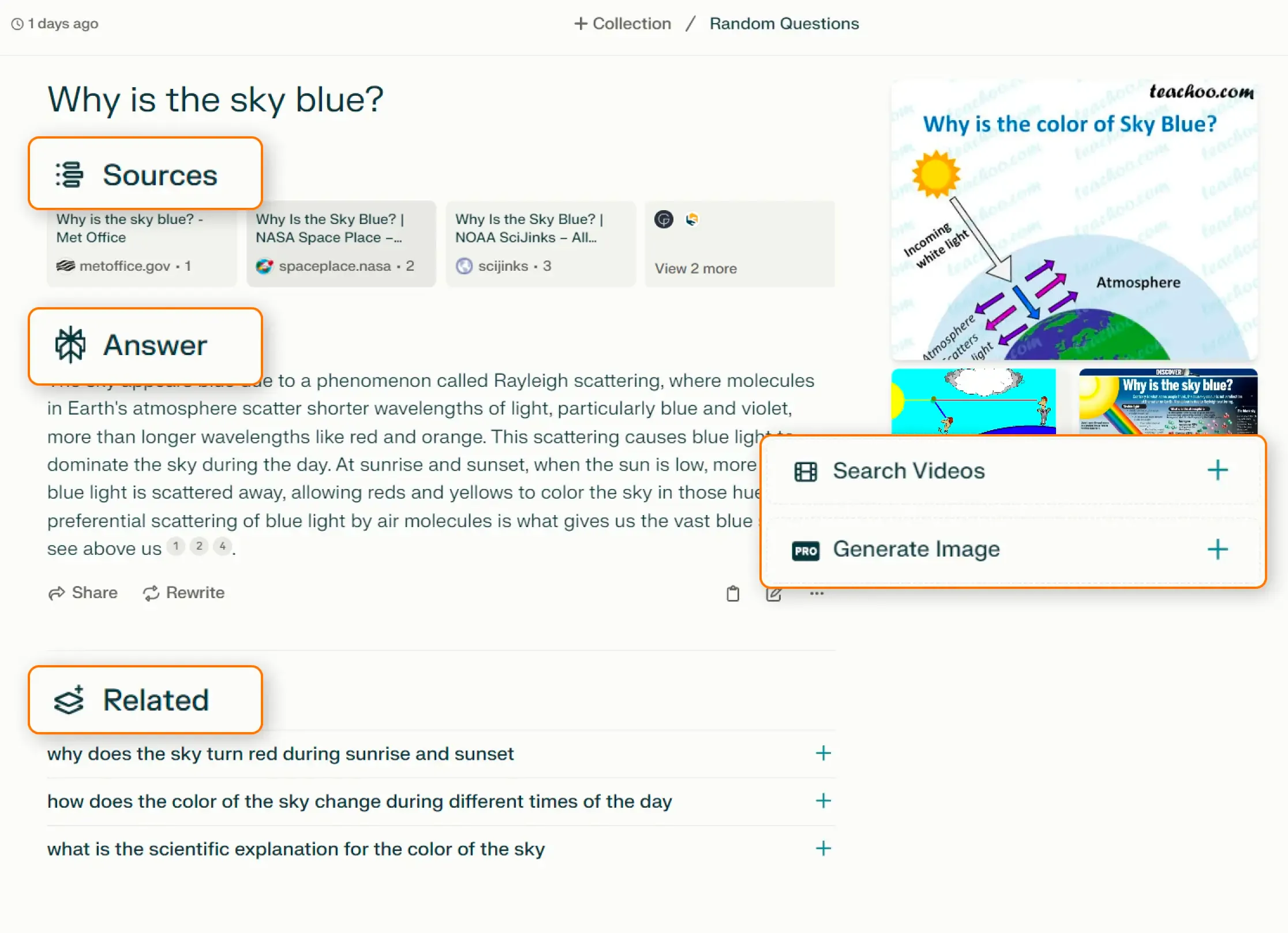
When Perplexity AI is asked a question, it doesn’t return a list of blue links for the user to go through. Instead, it summarizes the information in context to the user query and provides citations for the user to verify the source. How does Perplexity AI make this possible? At its core, Perplexity AI uses OpenAI’s GPT technology but has been trained as a conversational search engine. Perplexity AI’s founder and CEO, Aravind Srinivas, has described this AI chatbot assistant as the future of search.
Notable features:
- Real-time information: Perplexity AI stands out for its capability to fetch and synthesize information in real-time from across the web, allowing users to receive the most current answers to their queries.
- Focus search option: This feature allows users to refine their searches by selecting specific sources such as academic publications, YouTube, Reddit, or Wolfram | Alpha for a more targeted result.
- Citations: By providing citations for all its results, it allows users to verify the credibility of the information, hence there is minimal chance of hallucination or false information.
- Related question prompts: Based on your query, Perplexity AI suggests related questions that help you dive deeper and get more insights into the topic.
ChatGPT
ChatGPT doesn’t need an introduction, given its popularity. ChatGPT was introduced as an LLM that allows users to engage in human-like conversations and perform tasks such as content creation, data analysis, and more. Moreover, with appropriate ChatGPT plugins, one can automate their daily workflow tasks. From September 2023, ChatGPT has been a multimodal AI model which means it can generate images in the same interface using DALL.E and users can even create GPTs as per their requirement.
Notable features:
- Contextual understanding: Its ability to provide relevant and coherent responses enhances user interaction, making it a suitable tool for engaging in complex dialogue and ensuring a seamless conversational experience.
- Knowledge base integration: A user can integrate ChatGPT with an external knowledge base via a Plugin, GPT Builder, and API. This ensures that responses are based on the latest developments, data, and facts.
- Multimodal AI model: As a multimodal AI model, ChatGPT can process and generate information beyond text, including images and potentially audio or video. This expansion broadens its application, making it more versatile in user engagement and content creation.
So, how should a user choose between these tools?
The answer lies in their differences. The core model of Perplexity AI and ChatGPT is the same - GPT4. However, by understanding the tools’ capabilities and limitations, a user can select the one that best suits their requirements. Here are a few parameters:
1. Information Accuracy
Perplexity AI: Draws responses from live web pages, choose it when you want to ensure updated and accurate information, with source citations.
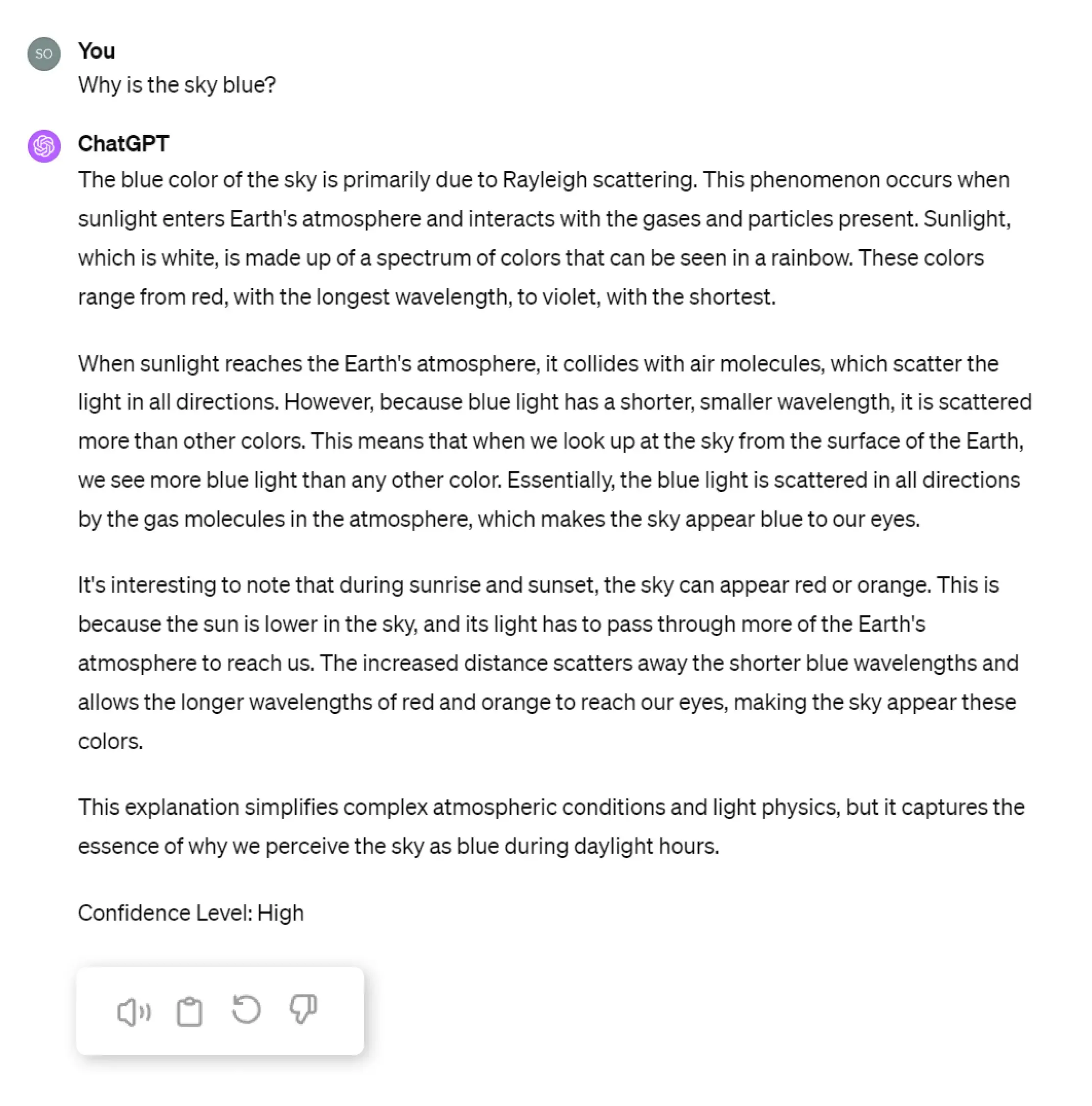
ChatGPT: Generates human-like, contextual responses without disclosing its information sources. For the source of information, you need to use the plugin for web browsing or prompt it to share information.
2. Quality of Responses
Perplexity AI: Capable of providing insightful answers with citations, allowing users to explore complex questions with confidence in the information's source.
ChatGPT: Its evolution is more focused on creating dynamic engaging interactions and content generation capabilities. Since it depends more on training data and a knowledge base for responses, it can hallucinate data.
3. User Interface
Perplexity AI: The interface offers a more modern and sophisticated experience with features like “Collection,” where you can organize your conversation threads in one place. It also has privacy settings for enhanced data control and confidentiality.
ChatGPT: UI is quite simple and easy to navigate, however, all your conversations are arranged chronologically in one endless scroll. It is not easy to search a conversation thread created, say, 4 months ago in ChatGPT.
Ultimately, the choice of tool depends on how it aligns with your personal and/or professional objectives. When should you use ChatGPT:
If you value interactive, contextual dialogue with options for image generation, text generation, API integration, Plugins, or creating GPTs for specific tasks, then ChatGPT is your choice. When to use Perplexity AI:
Perplexity AI will be a better choice if your needs are akin to having a smart research assistant capable of scanning, summarizing, and attributing information with accuracy and depth. Which multimodal AI tool or LLM have you been using? Let us know your thoughts.
Frequently Asked Questions
What is the main difference between Perplexity AI and ChatGPT?
Perplexity AI works like a search engine that scans the live web, summarizes the answer in context, and cites its sources by default. ChatGPT is built for conversation and content generation, producing human-like text and images but not disclosing its sources unless you prompt it or use a browsing plugin. In short: Perplexity is for sourced research, ChatGPT is for creating and chatting.
Do Perplexity AI and ChatGPT both use GPT-4?
Yes. The core model behind both tools is GPT-4, which is why their raw answer quality is similar. The real difference is the wrapper: Perplexity bolts GPT onto a real-time web index with citations, while ChatGPT leans on its training data and knowledge base. Perplexity also lets you switch between models like GPT-4, Claude 2.1, and Gemini Pro.
Which tool is more accurate and less likely to hallucinate?
Perplexity AI is the safer pick for factual accuracy because it draws answers from live web pages and attaches citations, so you can verify the source yourself. ChatGPT depends more heavily on training data and a fixed knowledge base, which makes it more prone to hallucinating or inventing details. If you need to trust the answer, the citations win.
How much do Perplexity AI and ChatGPT cost?
Both tools offer a free plan and charge $20 per month for their paid tier (Perplexity Pro and ChatGPT Plus). The paid plans unlock more capable models and features like file uploads. Perplexity allows limited file uploads even on its free plan, while ChatGPT gates file uploads behind ChatGPT Plus.
Should I use Perplexity AI or ChatGPT?
Use Perplexity AI when you need a research assistant that scans, summarizes, and attributes current information with citations. Use ChatGPT when you want interactive dialogue, content and text generation, image creation, plugins, API integration, or custom GPTs for specific tasks. Many people end up running both, one for finding facts and one for making things.
Sources
Keep reading
The archive →11 AI Tools Content Creators Actually Use
A practical rundown of the 11 AI tools content creators actually use day to day, from scripting to video and image generation.
AI TOOLSInVideo AI Review (2026): Is It Actually Worth It?
Hands-on 2026 review of InVideo AI covering features, pricing, and real performance. Learn how its text-to-video generation, AI voiceovers, voice cloning, and Sora 2 and VEO integration perform in practice.
AI TOOLSAI vs. Automation
Artificial Intelligence (AI) and Automation are transformative technologies often used interchangeably but serve distinct purposes. Automation excels at executing repetitive, rule-based tasks efficiently.
From The Cut
All takes →- The Best AI Browser Agents in 2026: What Actually Clicks Through
- The Best AI Design Tools in 2026: What Actually Helps You Ship Design
- The Best AI Email Assistants in 2026: What Actually Clears Your Inbox
- The Best AI Image Generators in 2026: An Operator's Ranking
- The Best AI Lead Generation Tools in 2026: What Actually Fills Pipeline
- The Best AI Meeting Note-Takers in 2026: What's Worth the Seat