Unveiling the Simplicity of AI: A Guided Journey Beyond The Hype
TL;DR
AI feels mysterious, but its core is simple: it is an intuition machine that learns from data and feedback, the same way you learn a new route by trial and error. Drawing on Philipp Gerbert's TED@BCG talk, this piece reframes AI as a tool that augments people rather than replacing them, points to real wins like industrial optimization and Google data-center energy savings, and argues you do not need to be in Silicon Valley to put it to work.
The discourse surrounding Artificial Intelligence (AI) often veers towards its complex, enigmatic nature, confusing the vast majority yet drawing them in. At its core, AI is grounded in simple and intuitive mechanisms. The fear of the unknown can be overcome by relooking at AI as a tool that can transform businesses and individual careers, not as the bogeyman coming to take your job.
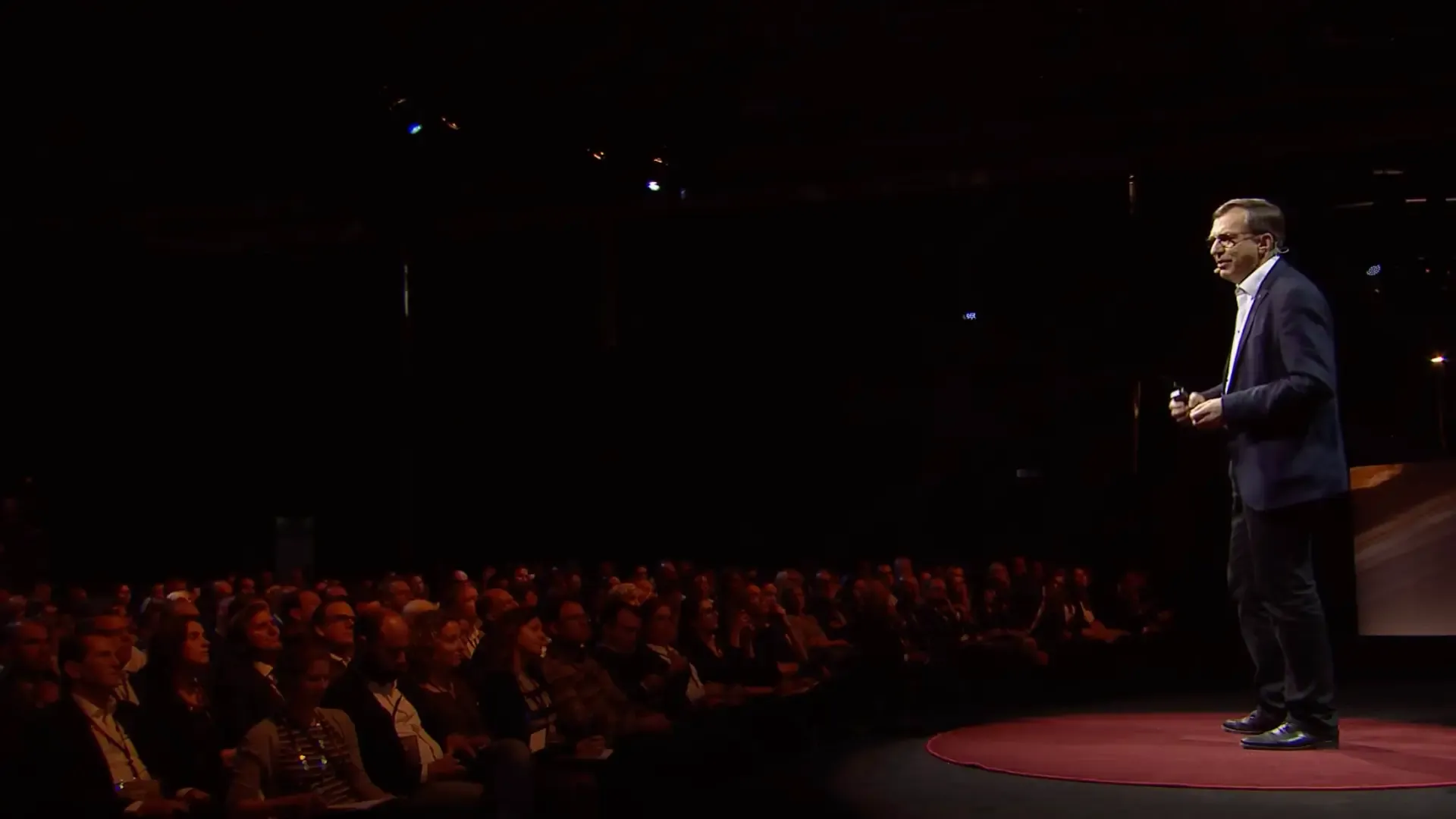
AI pathfinder Philipp Gerbert demystifies AI as a convoluted and mysterious tool for business on the TED@BCG stage, emphasizing that even individuals outside Silicon Valley can grasp and utilize AI effectively.
AI operates as an 'intuition machine', learning from experience and feedback, akin to a human navigating through unfamiliar territory. This learning mechanism, underpinned by incremental adjustments, forms the basis of AI's ability to solve complex problems.
As aptly put by Gerbert,
These are a few reasons why people need AI:
- Real-world Impact: Through examples like optimizing copper smelting operations and reducing energy costs at Google's data centers, AI demonstrates its potential for tangible benefits and cost savings. These real-world applications underline AI's effectiveness in rapidly processing and learning from vast amounts of data.
- Thinking Fast and Fast: Gerbert's narrative emphasizes AI's distinct advantage in both calculations and intuitive decisions, embodying a 'thinking fast and fast' model. For instance, AI's ability to rapidly process vast amounts of data and make informed decisions in real-time is exemplified in Google DeepMind's triumph in online poker, where quick, strategic decisions are crucial.
- Nurturing AI's Intelligence: The intelligence in AI isn't an off-the-shelf commodity but is nurtured through data training and feedback. Gerbert mentions a real-world example of a Korean copper smelter improving the purity of copper by training an AI with operational data, highlighting the practical utility and the necessity of nurturing AI with relevant data to derive actionable insights.
- A Shift in Operational Framework: Transitioning from centralized to decentralized application of AI, yet keeping learning centralized, drives effectiveness and scalability. This operational shift allows for more tailored solutions, enhancing customer experiences and business operations.
- Augmenting Human Capabilities: AI augments rather than replaces human capabilities, opening new horizons for career and business advancements. By moving from spectators to active participants in the AI realm, individuals and businesses can explore untapped opportunities and drive innovation.
Embracing AI's intuitive, simple core can propel individuals and businesses towards a future brimming with possibilities. As we transition from mere spectators to active actors in the AI world, the potential to explore new frontiers and drive innovation becomes boundless. By delving into these pivotal points, the veil of complexity surrounding AI lifts, offering a clear pathway towards harnessing its potential to drive innovation and solve real-world problems.
Frequently Asked Questions
What does it mean to call AI an 'intuition machine'?
It means AI does not follow hand-coded rules; it learns from examples and feedback, then makes plausible predictions the way human intuition does. Philipp Gerbert frames this as AI automating inductive learning: take input, act, get feedback, adjust. That loop is what lets it handle messy, real-world problems instead of just fixed calculations.
Do you need to be a Silicon Valley engineer to use AI in your business?
No. Gerbert's whole point is that AI's core mechanics are simple enough for non-experts to grasp and apply. The practical barrier is usually framing the right problem and feeding it relevant data, not the math itself, so founders and operators outside tech hubs can put it to work today.
Is there a real example of AI cutting costs, not just hype?
Yes. Google's DeepMind applied machine learning to its data centers and cut the energy used for cooling by about 40%, which translated to roughly a 15% reduction in overall power-usage-effectiveness overhead. The system reads thousands of sensors every few minutes and recommends settings that minimize energy while respecting safety limits.
Will AI replace human workers or augment them?
The argument here is augmentation, not replacement. AI is strong at rapidly processing data and surfacing decisions, while humans bring judgment, context, and accountability. Treated as a tool that extends your capabilities, it opens new work rather than simply deleting jobs, which is why moving from spectator to active user matters.
Why train AI on your own data instead of buying it off the shelf?
Because intelligence in AI is nurtured, not purchased ready-made. A model only becomes useful once it learns from data specific to your operation, like an industrial plant feeding its own process data in to improve output quality. The same model architecture can keep learning centrally while being applied in many decentralized places, which is what makes it scale.
Sources
Keep reading
The archive →Adobe Firefly: Transforming Design with AI Powered Precision
Explore Adobe Firefly, the revolutionary AI tool for creators. This guide delves into its Adobe suite integration, uses, and standout features such as Generative Fill and sophisticated photo options. Perfect for high-quality images and professional design, discover how Firefly transforms creative processes.
FUTURE OF AIDeep Dream Generator: Mastering AI Artistry - A Full Guide
Explore AI-driven art with Deep Dream Generator. This guide covers its neural network tech, starting steps, features like modifiers, AI models, quality settings, and use cases like digital art and marketing.
FUTURE OF AIHow do AI Content Detectors Work
Unsure. if the content is human-written or AI-generated? Explore the world of AI content detection tools, how they use advanced techniques like analyzing context, language, and even emotional depth to uncover the truth. Learn how AI content detection can help you navigate the ethical and quality landscape of the internet.
From The Cut
All takes →- Best AI Assistant in 2026: The Honest Operator Pick
- Best AI Chatbot in 2026: The Honest Operator Pick
- Best AI for Coding in 2026: The Honest Operator Ranking
- Best AI for Customer Support in 2026: The Operator Picks for Lean Teams
- Best AI for Data Analysis in 2026: The Operator Ranking
- Best AI for Marketing in 2026: The Operator Stack for Lean Teams